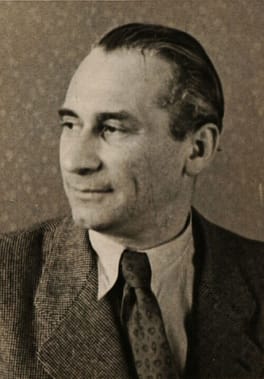
Photo: Unknown author / Public domain (source: Wikimedia Commons)
Karel Ančerl, born on April 11, 1908 in Tučapy, South Bohemian Region, Czech Republic, was a conductor, composer and violinist. Karel Ančerl died on July 3, 1973, aged 65. Listed accolades include Národní umělec (1966).
My Take
Karel Ančerl is one of those conductors whose story you almost can't believe — he survived Auschwitz, lost his wife and son in the camps, and somehow came out the other side to build one of the most distinguished careers in 20th-century classical music. He led the Czech Philharmonic for nearly two decades after the war and shaped it into a world-class ensemble, particularly celebrated for his deeply felt performances of Czech music — Dvořák, Janáček, Martinů — as well as contemporary works that other conductors kept at arm's length. When the Soviet tanks rolled into Prague in 1968, he was abroad on tour and simply didn't go back, eventually landing in Canada where he rebuilt himself yet again as principal conductor of the Toronto Symphony. The recordings he left, especially on Supraphon, are still revelatory. What gets me is that his conducting never sounds burdened by everything he endured — it sounds clear-eyed and alive, like someone who understood exactly what music is for.
This take was written by generative AI, one per person, from publicly reported facts (editorial policy). It is a reading of the record, not reporting.
1. Profile
- Name (English)
- Karel Ančerl
- Name (Japanese)
- カレル・アンチェル
- Reading
- かれる・あんちぇる
- Born
- April 11, 1908 – July 3, 1973
- Origin
- Tučapy, South Bohemian Region, Czech Republic
- Occupation
- conductor / composer / violinist / music educator / musician
- Zodiac / Chinese zodiac
- Aries / Monkey
2. Background
Awards & achievements
- 1966 Národní umělec
3. Links
- Official sitehttp://www.karel-ancerl.com
- Wikipedia (English)https://en.wikipedia.org/wiki/Karel%20An%C4%8Derl
- Wikipedia (Japanese)https://ja.wikipedia.org/wiki/%E3%82%AB%E3%83%AC%E3%83%AB%E3%83%BB%E3%82%A2%E3%83%B3%E3%83%81%E3%82%A7%E3%83%AB
- Wikidatahttps://www.wikidata.org/wiki/Q449504
4. About this entry
Tags
- Last updated
Facts are limited to publicly available information up to 2024; non-public or unconfirmed items are omitted. English text is machine-assisted (facts translated by Sonnet, "My Take" written by Opus 4.8). The Japanese page is the source of record.
Frequently asked questions
When was Karel Ančerl born?
Born April 11, 1908.
When did Karel Ančerl die?
Died July 3, 1973, aged 65.
Where was Karel Ančerl from?
Karel Ančerl was from Tučapy, South Bohemian Region, Czech Republic.
What did Karel Ančerl do?
Karel Ančerl worked as conductor, composer, violinist, music educator, musician.
Conductor — see all → · Composer — see all → · More people from the Czech Republic →