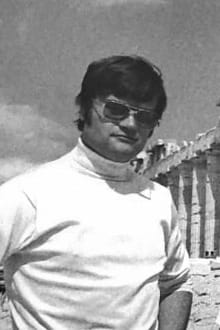
Photo: Josefoes / CC BY-SA 4.0 (source: Wikimedia Commons)
Born on December 19, 1938 in Prague, Czech Republic, Karel Svoboda was a songwriter, film score composer and musician. Death is recorded on January 28, 2007, at the age of 68. Notable works include Dracula.
My Take
Svoboda intrigues me as a Prague composer who poured his gift into 1970s television rather than the concert hall, with Dracula among his signature works. The Czech lands gave the world Smetana and Dvořák, and there is something I find charming about an heir to that melodic tradition delivering tunes straight into living rooms. Screen composers rarely get their names remembered, yet they quietly colonize our memories with themes we hum without knowing whose they are. Conductor, songwriter, score writer, he wore many hats. As long as his music keeps playing, he is not really gone, and I like that kind of legacy.
This take was written by generative AI, one per person, from publicly reported facts (editorial policy). It is a reading of the record, not reporting.
1. Profile
- Name (English)
- Karel Svoboda
- Name (Japanese)
- カレル・スヴォボダ
- Reading
- かれる・すゔぉぼだ
- Born
- December 19, 1938 – January 28, 2007
- Origin
- Prague, Czech Republic
- Occupation
- composer / songwriter / film score composer / musician / conductor
- Zodiac / Chinese zodiac
- Sagittarius / Tiger
2. Works & records
Filmography / notable works
| Category | Title |
|---|---|
| Notable work | Dracula |
3. Links
- Official sitehttps://www.karel-svoboda.cz
- Wikipedia (English)https://en.wikipedia.org/wiki/Karel%20Svoboda%20(composer)
- Wikipedia (Japanese)https://ja.wikipedia.org/wiki/%E3%82%AB%E3%83%AC%E3%83%AB%E3%83%BB%E3%82%B9%E3%83%B4%E3%82%A9%E3%83%9C%E3%83%80
- Wikidatahttps://www.wikidata.org/wiki/Q356687
4. About this entry
Tags
- Last updated
Facts are limited to publicly available information up to 2024; non-public or unconfirmed items are omitted. English text is machine-assisted (facts translated by Sonnet, "My Take" written by Opus 4.8). The Japanese page is the source of record.
Frequently asked questions
When was Karel Svoboda born?
Born December 19, 1938.
When did Karel Svoboda die?
Died January 28, 2007, aged 68.
Where was Karel Svoboda from?
Karel Svoboda was from Prague, Czech Republic.
What did Karel Svoboda do?
Karel Svoboda worked as composer, songwriter, film score composer, musician, conductor.
What was Karel Svoboda known for?
Notable works include Dracula.
Composer — see all → · Songwriter — see all → · More people from the Czech Republic →