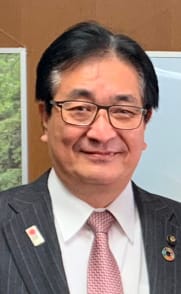
Photo: Fukuoka Branch, Taipei Economic and Cultural Office in Osaka / Attribution (source: Wikimedia Commons)
My Take
He ran the local citizens' college in Hita, lost his first mayoral race narrowly in 2003, won the office in 2011 and held it for three terms. Honestly? That kind of quiet, local career in politics is weirdly refreshing. Not everyone in government needs to be a talking head angling for TV time. Some people apparently just... do the work. There's something to be said for a politician who built his career in his own hometown rather than chasing fame. In a world of performative governance, that feels almost radical.
This take was written by generative AI, one per person, from publicly reported facts (editorial policy). It is a reading of the record, not reporting.
Overview
Keisuke Harada is a Japanese politician born on December 6, 1958. Born in Hita, Oita Prefecture, he graduated from the high school now known as Tokai University Fukuoka Senior High School, led the local citizens' college Jiyu no Mori Daigaku, and served three terms as mayor of Hita from 2011 until his defeat in the 2023 election.
1. Profile
- Name (English)
- Keisuke Harada
- Name (Japanese)
- 原田啓介
- Reading
- はらだ けいすけ
- Born
- December 6, 1958 (age 67)
- Origin
- Hita, Oita Prefecture, Japan
- Occupation
- Politician
- Zodiac / Chinese zodiac
- Sagittarius / Dog
2. Background
- High school
- Tokai University Fukuoka Senior High School
3. Links
- Wikipedia (Japanese)https://ja.wikipedia.org/wiki/%E5%8E%9F%E7%94%B0%E5%95%93%E4%BB%8B
- Wikidatahttps://www.wikidata.org/wiki/Q22127107
4. About this entry
Tags
- Last updated
Only publicly available facts are listed; non-public or unconfirmed items are omitted. Base data was compiled from Wikidata from June 2026 onward; ages are recalculated daily and deaths are checked against Wikidata on an ongoing basis. English text is machine-assisted (facts translated by Sonnet, "My Take" written by Opus 4.8). The Japanese page is the source of record.
Frequently asked questions
When was Keisuke Harada born?
Keisuke Harada was born on December 6, 1958 and is 67 years old.
Where is Keisuke Harada from?
Keisuke Harada is from Hita, Oita Prefecture, Japan.
What does Keisuke Harada do?
Keisuke Harada works as Politician.
Which high school did Keisuke Harada attend?
Keisuke Harada attended Tokai University Fukuoka Senior High School.
Politician — see all → · More people from Japan → · More people born on December 6 →