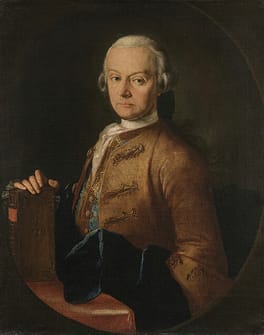
Photo: Pietro Antonio Lorenzoni / Public domain (source: Wikimedia Commons)
Public records list Leopold Mozart as a composer, musicologist and violinist. Leopold Mozart was born on November 14, 1719 in Augsburg, Swabia, Germany. Death is recorded on May 28, 1787, at the age of 67. Schooling on record includes University of Salzburg. Credited works include Jagdsinfonie.
My Take
I think Leopold Mozart deserves to be remembered as far more than just Wolfgang's father. He was a genuinely accomplished composer and violinist, and his violin treatise became a foundational text of its era. What fascinates me most is the trade-off he made: he largely set aside his own promising career to nurture and promote his son's genius, effectively becoming history's most devoted artistic manager. There's something both moving and a little tragic in that choice. I admire the discipline and foresight it took, and I suspect Wolfgang's brilliance owed as much to that paternal scaffolding as to raw talent.
This take was written by generative AI, one per person, from publicly reported facts (editorial policy). It is a reading of the record, not reporting.
1. Profile
- Name (English)
- Leopold Mozart
- Name (Japanese)
- レオポルト・モーツァルト
- Reading
- れおぽると・もーつぁると
- Born
- November 14, 1719 – May 28, 1787
- Origin
- Augsburg, Swabia, Germany
- Occupation
- composer / musicologist / violinist / pedagogue / music educator
- Zodiac / Chinese zodiac
- Scorpio / Boar
2. Background
- University
- University of Salzburg
3. Works & records
Filmography / notable works
| Category | Title |
|---|---|
| Notable work | Jagdsinfonie |
4. Links
5. About this entry
Tags
- Last updated
Facts are limited to publicly available information up to 2024; non-public or unconfirmed items are omitted. English text is machine-assisted (facts translated by Sonnet, "My Take" written by Opus 4.8). The Japanese page is the source of record.
Frequently asked questions
When was Leopold Mozart born?
Leopold Mozart was born on November 14, 1719.
When did Leopold Mozart die?
Leopold Mozart died on May 28, 1787, aged 67.
Where was Leopold Mozart from?
Leopold Mozart was from Augsburg, Swabia, Germany.
What did Leopold Mozart do?
Leopold Mozart worked as composer, musicologist, violinist, pedagogue, music educator.
Where did Leopold Mozart study?
Leopold Mozart attended University of Salzburg.
What was Leopold Mozart known for?
Leopold Mozart's notable works include Jagdsinfonie.
Composer — see all → · Musicologist — see all → · More people from Germany → · More people born on November 14 →