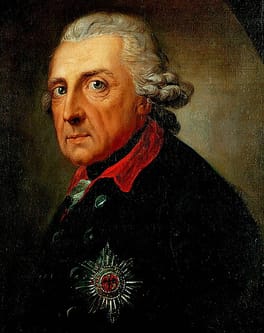
Photo: Anton Graff / Public domain (source: Wikimedia Commons)
Frederick II of Prussia was a ruler, art collector and monarch, born on January 24, 1712 in Berlin, Margraviate of Brandenburg. Death is recorded on August 17, 1786, at the age of 74. Recorded honors include Order of the Black Eagle, Order of the White Eagle (Polish–Lithuanian Commonwealth), Order of Saint Alexander Nevsky and 3 more.
My Take
Frederick the Great is one of history's great contradictions, and that is exactly why I keep returning to him. Born in Berlin in 1712, he turned Prussia into a major European power through hard war, yet the same man played the flute, wrote librettos, collected art, and traded letters with philosophers. A soldier-king who genuinely loved the arts is a rare animal. I do not romanticize the wars he fought, but the refusal to let either the battlefield or the salon define him entirely is what makes him endlessly compelling. Three centuries on, he still reads as a fully drawn, conflicted human being rather than a marble statue.
This take was written by generative AI, one per person, from publicly reported facts (editorial policy). It is a reading of the record, not reporting.
1. Profile
- Name (English)
- Frederick II of Prussia
- Name (Japanese)
- フリードリヒ2世
- Reading
- ふりーどりひ2世
- Born
- January 24, 1712 – August 17, 1786
- Origin
- Berlin, Margraviate of Brandenburg
- Occupation
- ruler / art collector / monarch / king / librettist
- Zodiac / Chinese zodiac
- Aquarius / Dragon
2. Background
Awards & achievements
- Order of the Black Eagle
- Order of the White Eagle (Polish–Lithuanian Commonwealth)
- Order of Saint Alexander Nevsky
- Order of St. Andrew
- Pour le Mérite
- Royal Order of the Seraphim
3. Links
4. About this entry
Tags
- Last updated
Facts are limited to publicly available information up to 2024; non-public or unconfirmed items are omitted. English text is machine-assisted (facts translated by Sonnet, "My Take" written by Opus 4.8). The Japanese page is the source of record.
Frequently asked questions
When was Frederick II of Prussia born?
Born January 24, 1712.
When did Frederick II of Prussia die?
Died August 17, 1786, aged 74.
Where was Frederick II of Prussia from?
Frederick II of Prussia was from Berlin, Margraviate of Brandenburg.
What did Frederick II of Prussia do?
Frederick II of Prussia worked as ruler, art collector, monarch, king, librettist.