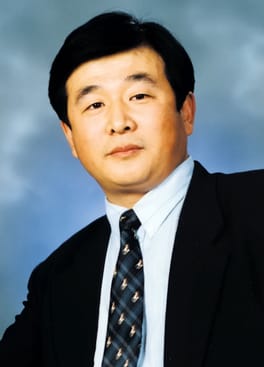
Photo: Falun Dafa Information Center / CC BY 3.0 (source: Wikimedia Commons)
Born on May 13, 1951 in Gongzhuling, People's Republic of China, Li Hongzhi is a religious leader. That puts Li Hongzhi at 75 years old in 2026. Notable works include Zhuan Falun.
My Take
Li Hongzhi is a figure I approach more as a student of modern history than as a fan. As the founder of Falun Gong, which he began teaching publicly in 1992, he sits at the center of one of the most consequential and contested religious stories of contemporary China. His book Zhuan Falun became the movement's core text, and the subsequent crackdown turned him into a deeply polarizing exile in the United States. I find his story significant precisely because it's so charged; it sits at the intersection of spirituality, politics and a vast diaspora, and it's impossible to understand recent China-related debates without it.
This take was written by generative AI, one per person, from publicly reported facts (editorial policy). It is a reading of the record, not reporting.
1. Profile
- Name (English)
- Li Hongzhi
- Name (Japanese)
- 李洪志
- Reading
- り・こうし
- Born
- May 13, 1951 (age 75)
- Origin
- Gongzhuling, People's Republic of China
- Occupation
- religious leader
- Zodiac / Chinese zodiac
- Taurus / Rabbit
2. Works & records
Filmography / notable works
| Category | Title |
|---|---|
| Notable work | Zhuan Falun |
3. Links
- Wikipedia (English)https://en.wikipedia.org/wiki/Li%20Hongzhi
- Wikipedia (Japanese)https://ja.wikipedia.org/wiki/%E6%9D%8E%E6%B4%AA%E5%BF%97
- Wikidatahttps://www.wikidata.org/wiki/Q366373
4. About this entry
Tags
- Last updated
Facts are limited to publicly available information up to 2024; non-public or unconfirmed items are omitted. English text is machine-assisted (facts translated by Sonnet, "My Take" written by Opus 4.8). The Japanese page is the source of record.
Frequently asked questions
When was Li Hongzhi born?
Li Hongzhi was born on May 13, 1951 and is 75 years old.
Where is Li Hongzhi from?
Li Hongzhi is from Gongzhuling, People's Republic of China.
What does Li Hongzhi do?
Li Hongzhi works as religious leader.
What is Li Hongzhi known for?
Li Hongzhi's notable works include Zhuan Falun.
More people from the People's Republic of China → · More people born on May 13 →