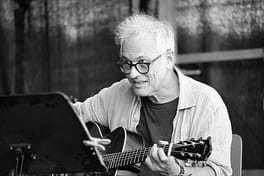
Photo: Schorle / CC BY-SA 4.0 (source: Wikimedia Commons)
My Take
Marc Ribot is the secret weapon on an astonishing number of records I love, and his angular, deliberately ragged guitar sound is instantly recognizable. His playing on Tom Waits albums like Rain Dogs is foundational, all rust and tension, the sonic equivalent of a streetlight flickering in an alley. What I admire most is his refusal to be a tasteful session pro; he brings genuine danger and noise even to song-form settings. From his Cuban tribute band Los Cubanos Postizos to the punk-jazz fury of Ceramic Dog, he keeps reinventing what a guitar can do. He is also a vocal advocate for musicians' rights, which makes me respect him beyond the fretboard.
This take was written by generative AI, one per person, from publicly reported facts (editorial policy). It is a reading of the record, not reporting.
Overview
Marc Ribot (born 1954 in Newark, New Jersey) is an American guitarist known for his distinctive work across jazz, rock, avant-garde and experimental music. He is celebrated as a frequent collaborator with Tom Waits, appearing on landmark albums such as Rain Dogs, and has worked with Elvis Costello, John Zorn and many others. He also leads his own projects, including the bands Los Cubanos Postizos and Ceramic Dog.
1. Profile
- Name (English)
- Marc Ribot
- Name (Japanese)
- マーク・リボー
- Reading
- まーく・りぼー
- Born
- May 21, 1954 (age 72)
- Origin
- Newark, New Jersey, United States
- Occupation
- Guitarist / Banjo player / Jazz musician / Jazz guitarist / Musician
- Zodiac / Chinese zodiac
- Gemini / Horse
2. Links
- Official sitehttps://www.marcribot.com/
- Xhttps://x.com/marcribotmusic
- Wikipedia (English)https://en.wikipedia.org/wiki/Marc%20Ribot
- Wikipedia (Japanese)https://ja.wikipedia.org/wiki/%E3%83%9E%E3%83%BC%E3%82%AF%E3%83%BB%E3%83%AA%E3%83%9C%E3%83%BC
- Wikidatahttps://www.wikidata.org/wiki/Q539506
3. About this entry
Tags
- Last updated
Facts are limited to publicly available information up to 2024; non-public or unconfirmed items are omitted. English text is machine-assisted (facts translated by Sonnet, "My Take" written by Opus 4.8). The Japanese page is the source of record.
Frequently asked questions
When was Marc Ribot born?
Born May 21, 1954 (age 72).
Where is Marc Ribot from?
Marc Ribot is from Newark, New Jersey, United States.
What does Marc Ribot do?
Marc Ribot works as Guitarist, Banjo player, Jazz musician, Jazz guitarist, Musician.
Guitarist — see all → · More people from the United States →