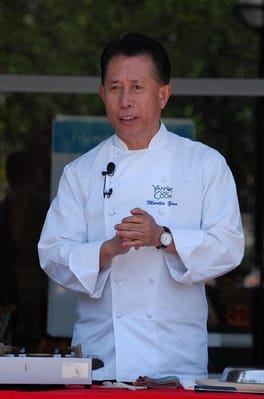
Photo: San Jose Library / CC BY-SA 2.0 (source: Wikimedia Commons)
Martin Yan is a chef and businessperson, born on December 22, 1948 in Guangzhou, People's Republic of China. That puts Martin Yan at 77 years old in 2026. Education on record includes University of California, Davis. Recorded honors include Great Immigrants Award (2007). Credited works include Yan Can Cook.
My Take
Martin Yan deserves more credit than he usually gets. Hosting Yan Can Cook since 1982 made Chinese cooking feel approachable to millions who might otherwise have been intimidated by it. His famous knife speed and quick humor were never just showmanship; they served a genuine teaching philosophy, the insistence that anyone can do this. As a Guangzhou-born, UC Davis-educated chef working in American media, he carried authenticity across cultures without diluting it. I admire the discipline of sustaining one show across decades. That kind of patient, generous longevity is its own quiet achievement, and I hold it in real esteem.
This take was written by generative AI, one per person, from publicly reported facts (editorial policy). It is a reading of the record, not reporting.
1. Profile
- Name (English)
- Martin Yan
- Name (Japanese)
- マーティン・ヤン
- Reading
- まーてぃん・やん
- Born
- December 22, 1948 (age 77)
- Origin
- Guangzhou, People's Republic of China
- Occupation
- chef / businessperson
- Zodiac / Chinese zodiac
- Capricorn / Rat
2. Background
- University
- University of California, Davis
Awards & achievements
- 2007 Great Immigrants Award
3. Works & records
Filmography / notable works
| Category | Title |
|---|---|
| Notable work | Yan Can Cook |
4. Links
- Official sitehttps://yancancook.com
- Instagramhttps://www.instagram.com/chefmartinyan/
- Xhttps://x.com/ChefMartinYan
- Wikipedia (English)https://en.wikipedia.org/wiki/Martin%20Yan
- Wikipedia (Japanese)https://ja.wikipedia.org/wiki/%E3%83%9E%E3%83%BC%E3%83%86%E3%82%A3%E3%83%B3%E3%83%BB%E3%83%A4%E3%83%B3
- Wikidatahttps://www.wikidata.org/wiki/Q848770
5. About this entry
Tags
- Last updated
Facts are limited to publicly available information up to 2024; non-public or unconfirmed items are omitted. English text is machine-assisted (facts translated by Sonnet, "My Take" written by Opus 4.8). The Japanese page is the source of record.
Frequently asked questions
When was Martin Yan born?
Martin Yan was born on December 22, 1948 and is 77 years old.
Where is Martin Yan from?
Martin Yan is from Guangzhou, People's Republic of China.
What does Martin Yan do?
Martin Yan works as chef, businessperson.
Where did Martin Yan study?
Martin Yan attended University of California, Davis.
What is Martin Yan known for?
Martin Yan's notable works include Yan Can Cook.
Chef — see all → · Businessperson — see all → · More people from the People's Republic of China → · More people born on December 22 →