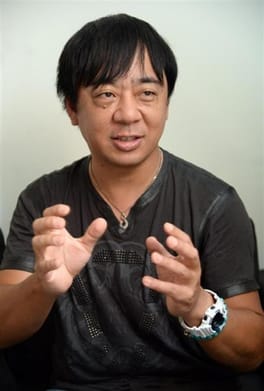
Photo: Kazuya Kamogawa ( 鴨川一也 ) / CC BY 2.0 (source: Wikimedia Commons)
My Take
Masami Obari is the kind of animator who has a signature so distinct you can clock his work in about two frames — that hyper-dynamic, almost impossibly angled mecha action, the exaggerated perspective on robot limbs mid-punch, the sheer mechanical bravado of it all. Born in Hiroshima in 1966, he came up through the wild creative energy of the late-80s and 90s anime boom and left fingerprints all over the super-robot genre — Voltage Fighter Gowcaizer, Fatal Fury, and a string of titles where the machines feel like they actually have weight and attitude. He later moved into directing, which honestly makes sense because his whole aesthetic already felt like it was composing entire sequences, not just key frames. As an animator-turned-director from that era, he represents a very specific strain of craft that prioritized visceral impact over subtlety — and honestly? It worked.
This take was written by generative AI, one per person, from publicly reported facts (editorial policy). It is a reading of the record, not reporting.
Overview
Masami Ōbari is a Japanese animator and film director born on January 24, 1966, in Hiroshima Prefecture, Japan. He is known for his work in the anime industry, where he has contributed both as a key animator and as a director. His zodiac sign is Aquarius and his Chinese zodiac sign is the Horse.
1. Profile
- Name (English)
- Masami Ōbari
- Name (Japanese)
- 大張正己
- Reading
- おおばり まさみ
- Born
- January 24, 1966 (age 60)
- Origin
- Hiroshima Prefecture, Japan
- Occupation
- Animator / Film Director
- Zodiac / Chinese zodiac
- Aquarius / Horse
2. Links
3. About this entry
Tags
- Last updated
Only publicly available facts are listed; non-public or unconfirmed items are omitted. Base data was compiled from Wikidata from June 2026 onward; ages are recalculated daily and deaths are checked against Wikidata on an ongoing basis. English text is machine-assisted (facts translated by Sonnet, "My Take" written by Opus 4.8). The Japanese page is the source of record.
Frequently asked questions
When was Masami Ōbari born?
Masami Ōbari was born on January 24, 1966 and is 60 years old.
Where is Masami Ōbari from?
Masami Ōbari is from Hiroshima Prefecture, Japan.
What does Masami Ōbari do?
Masami Ōbari works as Animator, Film Director.
Animator — see all → · Film Director — see all → · More people from Japan → · More people born on January 24 →