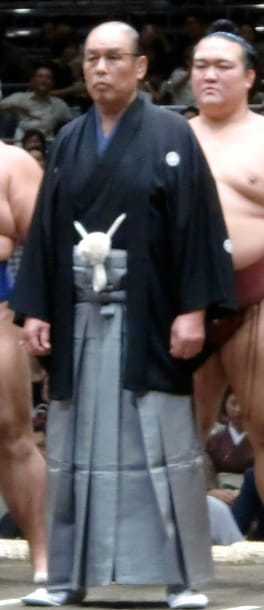
Photo: FourTildes / CC BY-SA 3.0 (source: Wikimedia Commons)
My Take
There's something I find genuinely moving about a guy who got into Nihon University and then, after being talked into it, left after a year to step into a sumo ring and collide with the biggest men alive. Most wrestlers were groomed for this from childhood, but Masateru Kaiketsu came to it late and reluctantly, and still rose to ōzeki twice and later chaired the Japan Sumo Association. Born in Yamaguchi in 1948, he carried that quiet, considered quality of someone who made the most of a path he had not planned. He passed away in May 2014, and I never got to watch him compete, but when I picture a wrestler who left university and still committed to wrapping a mawashi and plant his feet in the clay, I feel a kind of respect that's hard to put into words. He earned his place the long way around.
This take was written by generative AI, one per person, from publicly reported facts (editorial policy). It is a reading of the record, not reporting.
Overview
Masateru Kaiketsu (born February 16, 1948, in Yamaguchi City, Yamaguchi Prefecture) was a Japanese professional sumo wrestler. He studied at Nihon University before entering the sumo world. He passed away on May 18, 2014.
1. Profile
- Name (English)
- Masateru Kaiketsu
- Name (Japanese)
- 魁傑將晃
- Reading
- かいけつ まさてる
- Real name
- 西森輝門
- Born
- February 16, 1948 – May 18, 2014
- Origin
- Yamaguchi City, Yamaguchi Prefecture, Japan
- Occupation
- Sumo wrestler
- Zodiac / Chinese zodiac
- Aquarius / Rat
2. Background
- University
- Nihon University
3. Links
- Wikipedia (Japanese)https://ja.wikipedia.org/wiki/%E9%AD%81%E5%82%91%E5%B0%87%E6%99%83
- Wikidatahttps://www.wikidata.org/wiki/Q6347784
4. About this entry
Tags
- Last updated
Facts are limited to publicly available information up to 2024; non-public or unconfirmed items are omitted. English text is machine-assisted (facts translated by Sonnet, "My Take" written by Opus 4.8). The Japanese page is the source of record.
Frequently asked questions
When was Masateru Kaiketsu born?
Masateru Kaiketsu was born on February 16, 1948.
When did Masateru Kaiketsu die?
Masateru Kaiketsu died on May 18, 2014, aged 66.
Where was Masateru Kaiketsu from?
Masateru Kaiketsu was from Yamaguchi City, Yamaguchi Prefecture, Japan.
What did Masateru Kaiketsu do?
Masateru Kaiketsu worked as Sumo wrestler.
Where did Masateru Kaiketsu study?
Masateru Kaiketsu attended Nihon University.
Sumo wrestler — see all → · More people from Japan → · More people born on February 16 →