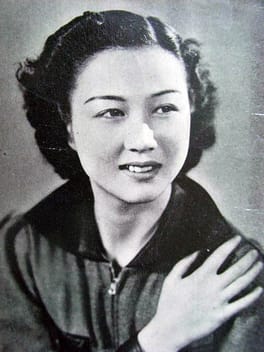
Photo: Unknown author / Public domain (source: Wikimedia Commons)
My Take
Michiko Kuwano is one of those names that makes you stop and think about how much history gets swallowed by time. Born in Tokyo in 1915, she came of age right as Japanese cinema was making the seismic shift from silent films to talkies — a genuinely chaotic and exciting moment for any performer to be working in. She was a screen actress in the truest sense of that era, carving out a presence on film at a time when the whole medium was still figuring itself out. What gets me is that she only lived to thirty-one, gone by April 1946, which means her whole career played out against the backdrop of wartime Japan — not exactly an easy climate for art to breathe in. She went from being Morinaga's first "Sweet Girl" to a prewar screen star alongside Mieko Takamine, and her daughter Miyuki Kuwano became an actress too. She was real on screen. That counts for a lot.
This take was written by generative AI, one per person, from publicly reported facts (editorial policy). It is a reading of the record, not reporting.
Overview
Michiko Kuwano (January 4, 1915 – April 1, 1946) was a Japanese film actress born in Tokyo. She was active during the transitional era of Japanese cinema when silent films gave way to talkies in the early Showa period. She died at the age of 31, leaving behind a career that spanned one of the most formative periods in Japanese film history.
1. Profile
- Name (English)
- Michiko Kuwano
- Name (Japanese)
- 桑野通子
- Reading
- くわの みちこ
- Born
- January 4, 1915 – April 1, 1946
- Origin
- Tokyo, Japan
- Height
- 158 cm
- Occupation
- Actress / Film Actress
- Zodiac / Chinese zodiac
- Capricorn / Rabbit
- Active years
- 1934 - 1946
2. Works & records
Works summary
- Appearances
- 32
Filmography / notable works
| Category | Title |
|---|---|
| Film | 金環蝕 |
| Film | 恋愛修学旅行 |
| Film | 東京の英雄 |
| Film | 彼と彼女と少年達 |
| Film | 船頭可愛いや |
| Film | 感情山脈 |
| Film | 有りがたうさん |
| Film | 家族会議 |
| Film | 男性対女性 |
| Film | 淑女は何を忘れたか |
| Film | 恋も忘れて |
| Film | 男の償ひ・前後篇 |
| Film | 進軍の歌 |
| Film | 蛍の光 |
| Film | 家庭日記 |
| Film | 向日葵娘 |
| Film | 新女性問答 |
| Film | 兄とその妹 |
| Film | 続愛染かつら |
| Film | 波濤 |
| Film | 愛染かつら 完結編 |
| Film | 愛の暴風 |
| Film | 西住戦車長伝 |
| Film | 元気で行かうよ |
| Film | 戸田家の兄妹 |
| Film | 花 |
| Film | 新たなる幸福 |
| Film | をぢさん |
| Film | 假面の舞踏-秘話ノルマントン号事件- |
| Film | 不沈艦撃沈 |
| Film | 伊豆の娘たち |
| Film | 女性の勝利 |
3. Links
- Wikipedia (Japanese)https://ja.wikipedia.org/wiki/%E6%A1%91%E9%87%8E%E9%80%9A%E5%AD%90
- Wikidatahttps://www.wikidata.org/wiki/Q11537630
4. About this entry
Tags
- Last updated
Only publicly available facts are listed; non-public or unconfirmed items are omitted. Base data was compiled from Wikidata from June 2026 onward; ages are recalculated daily and deaths are checked against Wikidata on an ongoing basis. Works and profile fields sourced from Wikipedia reflect content as of 2026-08-26. English text is machine-assisted (facts translated by Sonnet, "My Take" written by Opus 4.8). The Japanese page is the source of record.
Frequently asked questions
When was Michiko Kuwano born?
Michiko Kuwano was born on January 4, 1915.
When did Michiko Kuwano die?
Michiko Kuwano died on April 1, 1946, aged 31.
Where was Michiko Kuwano from?
Michiko Kuwano was from Tokyo, Japan.
What did Michiko Kuwano do?
Michiko Kuwano worked as Actress, Film Actress.
How tall was Michiko Kuwano?
Michiko Kuwano was 158 cm tall.
When was Michiko Kuwano active?
Michiko Kuwano was active from 1934 to 1946.
Actress — see all → · Film Actress — see all → · More people from Japan → · More people born on January 4 →