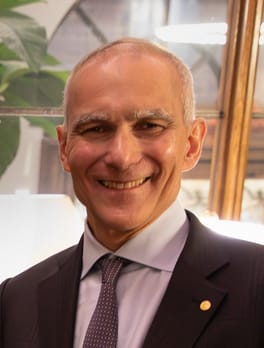
Photo: US Embassy Sweden / CC BY 2.0 (source: Wikimedia Commons)
Born on March 15, 1961, Moungi Bawendi is from Paris, France. Moungi Bawendi is listed as a chemist. The age as of 2026 is 65. Education on record includes University of Chicago. Awards on record include Ernest Orlando Lawrence Award (2006), Packard Fellowship for Science and Engineering (1991), ACS Award in Colloid Chemistry (2010) and 3 more.
My Take
What strikes me about Bawendi is that the quantum dots he helped tame are now glowing in TV screens and lighting up tumors during surgery, yet the breakthrough was really about controlling chemistry precisely enough to make particles uniform. I appreciate that he carries both French and American identities, born in Paris and later anchored at MIT. The 2023 Nobel felt like overdue recognition for work that had quietly reshaped materials science for decades. He keeps his personal life private, which I find refreshing for someone whose research touches so many consumer products. A scientist whose impact you've literally seen without knowing his name.
This take was written by generative AI, one per person, from publicly reported facts (editorial policy). It is a reading of the record, not reporting.
1. Profile
- Name (English)
- Moungi Bawendi
- Name (Japanese)
- ムンジ・バウェンディ
- Reading
- むんじ・ばうぇんでぃ
- Born
- March 15, 1961 (age 65)
- Origin
- Paris, France
- Occupation
- chemist
- Zodiac / Chinese zodiac
- Pisces / Ox
2. Background
- University
- University of Chicago
Awards & achievements
- 2006 Ernest Orlando Lawrence Award
- 1991 Packard Fellowship for Science and Engineering
- 2010 ACS Award in Colloid Chemistry
- 1997 Coblentz Award
- 2020 Clarivate Citation Laureates
- 2023 Nobel Prize in Chemistry
3. Links
- Official sitehttps://nanocluster.mit.edu/
- Wikipedia (English)https://en.wikipedia.org/wiki/Moungi%20Bawendi
- Wikipedia (Japanese)https://ja.wikipedia.org/wiki/%E3%83%A0%E3%83%B3%E3%82%B8%E3%83%BB%E3%83%90%E3%82%A6%E3%82%A7%E3%83%B3%E3%83%87%E3%82%A3
- Wikidatahttps://www.wikidata.org/wiki/Q15433043
4. About this entry
Tags
- Last updated
Facts are limited to publicly available information up to 2024; non-public or unconfirmed items are omitted. English text is machine-assisted (facts translated by Sonnet, "My Take" written by Opus 4.8). The Japanese page is the source of record.
Frequently asked questions
When was Moungi Bawendi born?
Born March 15, 1961 (age 65).
Where is Moungi Bawendi from?
Moungi Bawendi is from Paris, France.
What does Moungi Bawendi do?
Moungi Bawendi works as chemist.