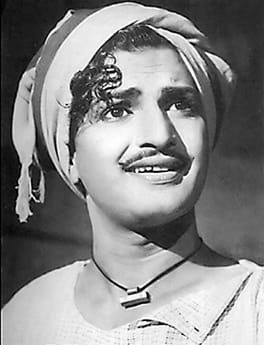
Photo: Unknown author / Public domain (source: Wikimedia Commons)
N. T. Rama Rao was a politician, film director and film producer, born on May 28, 1923 in Nemmikuru, Krishna district, India. N. T. Rama Rao died on January 18, 1996 at the age of 72. Education on record includes Andhra-Christian College. Awards on record include Padma Shri in arts (1968), Nandi Award for Best Actor (1970) and Filmfare Award for Best Actor – Telugu (1973).
My Take
N. T. Rama Rao is one of those towering figures where the line between screen idol and statesman dissolves entirely. A colossus of Telugu cinema who later became chief minister of Andhra Pradesh and founded the Telugu Desam Party, he turned the devotion he earned playing gods and heroes into genuine political power. I find that arc remarkable, because the adoration was real on both fronts. Winning a Padma Shri and Filmfare honors confirmed his craft, but founding the state's first major regional party may be the deeper legacy. He is proof of how cinema and identity intertwine in Indian public life in ways few Western figures ever match.
This take was written by generative AI, one per person, from publicly reported facts (editorial policy). It is a reading of the record, not reporting.
1. Profile
- Name (English)
- N. T. Rama Rao
- Name (Japanese)
- N・T・ラーマ・ラオ
- Reading
- N・T・らーま・らお
- Born
- May 28, 1923 – January 18, 1996
- Origin
- Nemmikuru, Krishna district, India
- Occupation
- actor / politician / film director / film producer / film actor
- Zodiac / Chinese zodiac
- Gemini / Boar
2. Background
- University
- Andhra-Christian College
Awards & achievements
- 1968 Padma Shri in arts
- 1970 Nandi Award for Best Actor
- 1973 Filmfare Award for Best Actor – Telugu
3. Links
4. About this entry
Tags
- Last updated
Facts are limited to publicly available information up to 2024; non-public or unconfirmed items are omitted. English text is machine-assisted (facts translated by Sonnet, "My Take" written by Opus 4.8). The Japanese page is the source of record.
Frequently asked questions
When was N. T. Rama Rao born?
Born May 28, 1923.
When did N. T. Rama Rao die?
Died January 18, 1996, aged 72.
Where was N. T. Rama Rao from?
N. T. Rama Rao was from Nemmikuru, Krishna district, India.
What did N. T. Rama Rao do?
N. T. Rama Rao worked as actor, politician, film director, film producer, film actor.
Actor — see all → · Politician — see all → · More people from India →