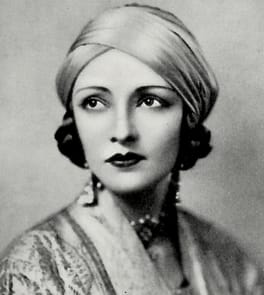
Photo: Irving Chidnoff / Public domain (source: Wikimedia Commons)
Natacha Rambova was born on January 19, 1897 in Salt Lake City, Utah, United States. Natacha Rambova was listed as an actor, archaeologist and screenwriter. Death is recorded on June 5, 1966, at the age of 69.
My Take
Natacha Rambova is exactly the kind of figure I love to rediscover. Born Winifred Shaughnessy in Salt Lake City, she became a dancer, costume designer, art director, and later a serious Egyptologist. In the 1920s she was among the very few women wielding genuine creative control behind the camera, most famously alongside Rudolph Valentino. What strikes me is the refusal to be boxed in: glamour and scholarship, Hollywood and the ancient world. She was decades ahead of her time, and I think she deserves recognition as an artist in her own right, not merely as a famous wife.
This take was written by generative AI, one per person, from publicly reported facts (editorial policy). It is a reading of the record, not reporting.
1. Profile
- Name (English)
- Natacha Rambova
- Name (Japanese)
- ナターシャ・ランボヴァ
- Reading
- なたーしゃ・らんぼゔぁ
- Born
- January 19, 1897 – June 5, 1966
- Origin
- Salt Lake City, Utah, United States
- Occupation
- actor / archaeologist / screenwriter / film producer / writer
- Zodiac / Chinese zodiac
- Capricorn / Rooster
2. Links
- Wikipedia (English)https://en.wikipedia.org/wiki/Natacha%20Rambova
- Wikidatahttps://www.wikidata.org/wiki/Q458874
3. About this entry
Tags
- Last updated
Facts are limited to publicly available information up to 2024; non-public or unconfirmed items are omitted. English text is machine-assisted (facts translated by Sonnet, "My Take" written by Opus 4.8). The Japanese page is the source of record.
Frequently asked questions
When was Natacha Rambova born?
Natacha Rambova was born on January 19, 1897.
When did Natacha Rambova die?
Natacha Rambova died on June 5, 1966, aged 69.
Where was Natacha Rambova from?
Natacha Rambova was from Salt Lake City, Utah, United States.
What did Natacha Rambova do?
Natacha Rambova worked as actor, archaeologist, screenwriter, film producer, writer.
Actor — see all → · More people from the United States → · More people born on January 19 →