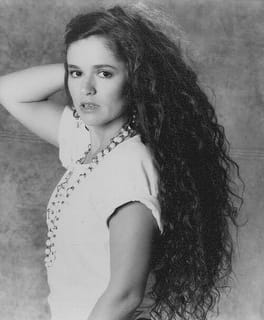
Photo: MCA Records / Public domain (source: Wikimedia Commons)
Nicolette Larson was born on July 17, 1952 in Helena, Montana, United States. Nicolette Larson was credited as a singer, songwriter and composer. Death is recorded on December 16, 1997, at the age of 45.
My Take
Nicolette Larson is one of those artists who deserved a far longer run than fate allowed. Growing up in Helena, Montana, she had this warm, honey-coated voice that fit perfectly into the late-seventies soft rock scene, and when she took Neil Young's "Lotta Love" and made it her own in 1978 — hitting number one on the adult contemporary chart and cracking the pop top ten — it felt genuinely effortless, like she'd been born to sing it. She had that rare quality of sounding intimate even on radio, as if she were singing just for you. The adult contemporary hits that followed showed real consistency, not a one-hit flash. Gone at 45 in 1997, she left behind a catalog that still sounds lovely today, a reminder that sometimes the best voices don't get the long careers they earn.
This take was written by generative AI, one per person, from publicly reported facts (editorial policy). It is a reading of the record, not reporting.
1. Profile
- Name (English)
- Nicolette Larson
- Name (Japanese)
- ニコレット・ラーソン
- Reading
- にこれっと・らーそん
- Born
- July 17, 1952 – December 16, 1997
- Origin
- Helena, Montana, United States
- Occupation
- singer / songwriter / composer / guitarist / actor
- Zodiac / Chinese zodiac
- Cancer / Dragon
2. Links
- Official sitehttp://www.nicolettelarson.com/
- Wikipedia (English)https://en.wikipedia.org/wiki/Nicolette%20Larson
- Wikipedia (Japanese)https://ja.wikipedia.org/wiki/%E3%83%8B%E3%82%B3%E3%83%AC%E3%83%83%E3%83%88%E3%83%BB%E3%83%A9%E3%83%BC%E3%82%BD%E3%83%B3
- Wikidatahttps://www.wikidata.org/wiki/Q455344
3. About this entry
Tags
- Last updated
Only publicly available facts are listed; non-public or unconfirmed items are omitted. Base data was compiled from Wikidata from June 2026 onward; ages are recalculated daily and deaths are checked against Wikidata on an ongoing basis. English text is machine-assisted (facts translated by Sonnet, "My Take" written by Opus 4.8). The Japanese page is the source of record.
Frequently asked questions
When was Nicolette Larson born?
Nicolette Larson was born on July 17, 1952.
When did Nicolette Larson die?
Nicolette Larson died on December 16, 1997, aged 45.
Where was Nicolette Larson from?
Nicolette Larson was from Helena, Montana, United States.
What did Nicolette Larson do?
Nicolette Larson worked as singer, songwriter, composer, guitarist, actor.
Singer — see all → · Songwriter — see all → · More people from the United States → · More people born on July 17 →