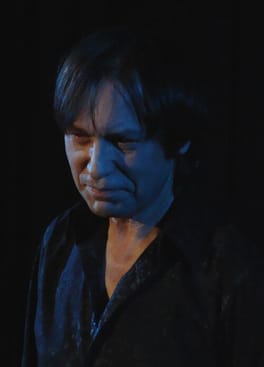
Photo: Schekinov Alexey Victorovich / CC BY-SA 3.0 (source: Wikimedia Commons)
Nikolai Noskov is a singer, composer and multi-instrumentalist. Nikolai Noskov was born in Gagarin, Smolensk Oblast, Russia on January 12, 1956. That works out to 70 years old in 2026. Recorded honors include Medal "For Strengthening of Brotherhood in Arms", Golden Gramophone Award, Prize of the Federal Security Service of Russia and 1 more.
My Take
Nikolai Noskov fascinates me as a bridge between two worlds. Fronting Gorky Park in the late 1980s meant carrying hard rock out from behind the Iron Curtain, which takes real cultural courage, and his later reinvention as a five-time Golden Gramophone winner and Merited Artist of Russia shows a rare willingness to evolve. I admire artists who keep refining their instrument rather than coasting on a youthful peak, and his journey from rock howl to mature, controlled vocals is exactly that. The fact that he plays guitar and keyboards too marks him as a complete musician, not just a frontman, and I respect that craft.
This take was written by generative AI, one per person, from publicly reported facts (editorial policy). It is a reading of the record, not reporting.
1. Profile
- Name (English)
- Nikolai Noskov
- Name (Japanese)
- ニコライ・ノスコフ
- Reading
- にこらい・のすこふ
- Born
- January 12, 1956 (age 70)
- Origin
- Gagarin, Smolensk Oblast, Russia
- Occupation
- singer / composer / multi-instrumentalist / guitarist / keyboardist
- Zodiac / Chinese zodiac
- Capricorn / Monkey
2. Background
Awards & achievements
- Medal "For Strengthening of Brotherhood in Arms"
- Golden Gramophone Award
- Prize of the Federal Security Service of Russia
- Merited Artist of Russia
3. Links
- Official sitehttps://nnoskov.ru/
- Instagramhttps://www.instagram.com/nikolaynoskov_official/
- Wikipedia (English)https://en.wikipedia.org/wiki/Nikolai%20Noskov
- Wikipedia (Japanese)https://ja.wikipedia.org/wiki/%E3%83%8B%E3%82%B3%E3%83%A9%E3%82%A4%E3%83%BB%E3%83%8E%E3%82%B9%E3%82%B3%E3%83%95
- Wikidatahttps://www.wikidata.org/wiki/Q1978163
4. About this entry
Tags
- Last updated
Facts are limited to publicly available information up to 2024; non-public or unconfirmed items are omitted. English text is machine-assisted (facts translated by Sonnet, "My Take" written by Opus 4.8). The Japanese page is the source of record.
Frequently asked questions
When was Nikolai Noskov born?
Born January 12, 1956 (age 70).
Where is Nikolai Noskov from?
Nikolai Noskov is from Gagarin, Smolensk Oblast, Russia.
What does Nikolai Noskov do?
Nikolai Noskov works as singer, composer, multi-instrumentalist, guitarist, keyboardist.
Singer — see all → · Composer — see all → · More people from Russia →