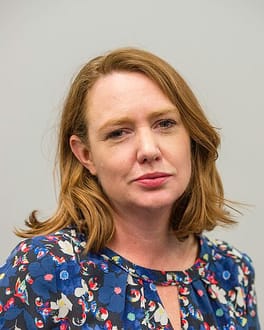
Photo: Arild Vågen / CC BY-SA 4.0 (source: Wikimedia Commons)
Paula Hawkins is a journalist, novelist and writer, born on August 26, 1972 in Harare, Harare Province, Zimbabwe. As of 2026, Paula Hawkins is 54 years old. Schooling on record includes Collingham College. Recorded honors include BBC 100 Women (2016) and Audie Award for Audiobook of the Year (2016). Credited works include The Girl on the Train and Into the Water.
My Take
What fascinates me about Paula Hawkins is the timing. She spent years as a financial journalist before The Girl on the Train detonated when she was in her early forties, proving that a writer's best chapter can arrive late. I admire how she weaponizes the mundane, the bored glance from a commuter train, into something genuinely unsettling. Her Oxford education and reporter's eye give her thrillers a forensic precision that lesser imitators chase but rarely catch. Into the Water confirmed she was no one-hit wonder. She writes ordinary people circling private darkness, and she does it with quiet, almost clinical confidence.
This take was written by generative AI, one per person, from publicly reported facts (editorial policy). It is a reading of the record, not reporting.
1. Profile
- Name (English)
- Paula Hawkins
- Name (Japanese)
- ポーラ・ホーキンズ
- Reading
- ぽーら・ほーきんず
- Born
- August 26, 1972 (age 54)
- Origin
- Harare, Harare Province, Zimbabwe
- Occupation
- journalist / novelist / writer
- Zodiac / Chinese zodiac
- Virgo / Rat
2. Background
- University
- Collingham College
Awards & achievements
- 2016 BBC 100 Women
- 2016 Audie Award for Audiobook of the Year
3. Works & records
Filmography / notable works
| Category | Title |
|---|---|
| Notable work | The Girl on the Train |
| Notable work | Into the Water |
4. Links
- Official sitehttps://paulahawkinsbooks.com
- Instagramhttps://www.instagram.com/paulahawkins2010/
- Wikipedia (English)https://en.wikipedia.org/wiki/Paula%20Hawkins%20(author)
- Wikipedia (Japanese)https://ja.wikipedia.org/wiki/%E3%83%9D%E3%83%BC%E3%83%A9%E3%83%BB%E3%83%9B%E3%83%BC%E3%82%AD%E3%83%B3%E3%82%BA
- Wikidatahttps://www.wikidata.org/wiki/Q20732317
5. About this entry
Tags
- Last updated
Facts are limited to publicly available information up to 2024; non-public or unconfirmed items are omitted. English text is machine-assisted (facts translated by Sonnet, "My Take" written by Opus 4.8). The Japanese page is the source of record.
Frequently asked questions
When was Paula Hawkins born?
Born August 26, 1972 (age 54).
Where is Paula Hawkins from?
Paula Hawkins is from Harare, Harare Province, Zimbabwe.
What does Paula Hawkins do?
Paula Hawkins works as journalist, novelist, writer.
What is Paula Hawkins known for?
Notable works include The Girl on the Train, Into the Water.
Journalist — see all → · Novelist — see all → · More people from Zimbabwe →