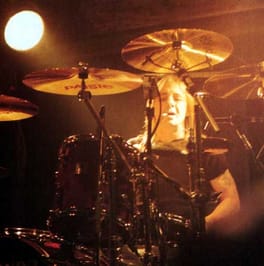
Photo: The original uploader was Ac-dcfreak785 at English Wikipedia. / Public domain (source: Wikimedia Commons)
Phil Rudd is credited as a rock drummer. Phil Rudd was born in Melbourne, Victoria, Australia on May 19, 1954. The age as of 2026 is 72.
My Take
Phil Rudd is, to me, the human metronome at the heart of AC/DC. He isn't flashy and never tried to be; his whole genius is that rock-solid, in-the-pocket backbeat that makes Back in Black and Highway to Hell feel unstoppable. As the band's only Australian-born member for stretches, and a Rock and Roll Hall of Fame inductee in 2003, he's woven into their identity across three separate stints. I love that he proves drumming greatness isn't about fills or speed but about feel and discipline. When that snare hits dead on the beat, that's Phil, and the whole band locks in.
This take was written by generative AI, one per person, from publicly reported facts (editorial policy). It is a reading of the record, not reporting.
1. Profile
- Name (English)
- Phil Rudd
- Name (Japanese)
- フィル・ラッド
- Reading
- ふぃる・らっど
- Born
- May 19, 1954 (age 72)
- Origin
- Melbourne, Victoria, Australia
- Occupation
- rock drummer
- Zodiac / Chinese zodiac
- Taurus / Horse
2. Links
- Official sitehttp://philrudd.com/
- Wikipedia (English)https://en.wikipedia.org/wiki/Phil%20Rudd
- Wikipedia (Japanese)https://ja.wikipedia.org/wiki/%E3%83%95%E3%82%A3%E3%83%AB%E3%83%BB%E3%83%A9%E3%83%83%E3%83%89
- Wikidatahttps://www.wikidata.org/wiki/Q345400
3. About this entry
Tags
- Last updated
Facts are limited to publicly available information up to 2024; non-public or unconfirmed items are omitted. English text is machine-assisted (facts translated by Sonnet, "My Take" written by Opus 4.8). The Japanese page is the source of record.
Frequently asked questions
When was Phil Rudd born?
Born May 19, 1954 (age 72).
Where is Phil Rudd from?
Phil Rudd is from Melbourne, Victoria, Australia.
What does Phil Rudd do?
Phil Rudd works as rock drummer.