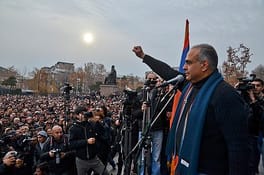
Photo: Yerevanci / CC BY-SA 3.0 (source: Wikimedia Commons)
Raffi Hovannisian was born in Fresno, California, United States on November 20, 1959. Raffi Hovannisian is listed as a politician and diplomat. The age as of 2026 is 66. Schooling on record includes Palisades Charter High School and University of California, Berkeley.
My Take
Raffi Hovannisian's story is the one that grabs me here. A Fresno-born, Berkeley-educated son of the Armenian diaspora who chose to go back and become the newly independent nation's first Foreign Minister. That kind of homecoming, building a state instead of just admiring it from afar, takes a conviction few people can muster. Founding the Heritage party and the country's first independent research center tells me he wanted to leave institutions and ideas behind, not just speeches. I see a genuine nation-builder caught between America and a small, fragile homeland, and that earns my quiet respect.
This take was written by generative AI, one per person, from publicly reported facts (editorial policy). It is a reading of the record, not reporting.
1. Profile
- Name (English)
- Raffi Hovannisian
- Name (Japanese)
- ラッフィ・ホヴァニスィアン
- Reading
- らっふぃ・ほゔぁにすぃあん
- Born
- November 20, 1959 (age 66)
- Origin
- Fresno, California, United States
- Occupation
- politician / diplomat
- Zodiac / Chinese zodiac
- Scorpio / Boar
2. Background
- High school
- Palisades Charter High School
- University
- University of California, Berkeley
3. Links
4. About this entry
Tags
- Last updated
Facts are limited to publicly available information up to 2024; non-public or unconfirmed items are omitted. English text is machine-assisted (facts translated by Sonnet, "My Take" written by Opus 4.8). The Japanese page is the source of record.
Frequently asked questions
When was Raffi Hovannisian born?
Born November 20, 1959 (age 66).
Where is Raffi Hovannisian from?
Raffi Hovannisian is from Fresno, California, United States.
What does Raffi Hovannisian do?
Raffi Hovannisian works as politician, diplomat.
Politician — see all → · Diplomat — see all → · More people from the United States →