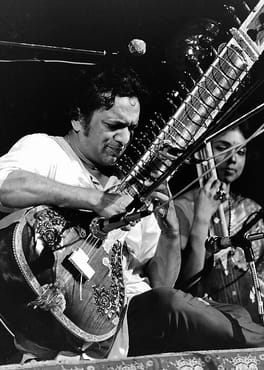
Photo: Markgoff2972 / CC BY-SA 4.0 (source: Wikimedia Commons)
Ravi Shankar was born on April 7, 1920 in Varanasi, Varanasi district, India. Ravi Shankar was credited as a composer, sitarist and film director. Death is recorded on December 11, 2012, at the age of 92. Recorded honors include Commandeur des Arts et des Lettres, Knight Commander of the Order of the British Empire, Ramon Magsaysay Award (1992) and 5 more.
My Take
To me, Ravi Shankar was the great bridge that opened Indian classical music to the world. Born in sacred Varanasi, he mastered the sitar so completely that he could mentor a Beatle and still command the awe of purists. The Grammy Lifetime Achievement Award and Japan's Praemium Imperiale only confirm what his music already proved: that he carried an Eastern spiritual sensibility into Western ears without diluting it. He passed in 2012 at ninety-two, yet his meditative ragas still ring out everywhere. I find myself wanting to sit upright and simply listen, which is the mark of a true master.
This take was written by generative AI, one per person, from publicly reported facts (editorial policy). It is a reading of the record, not reporting.
1. Profile
- Name (English)
- Ravi Shankar
- Name (Japanese)
- ラヴィ・シャンカル
- Reading
- らゔぃ・しゃんかる
- Born
- April 7, 1920 – December 11, 2012
- Origin
- Varanasi, Varanasi district, India
- Occupation
- composer / sitarist / film director / politician / conductor
- Zodiac / Chinese zodiac
- Aries / Monkey
2. Background
Awards & achievements
- Commandeur des Arts et des Lettres
- Knight Commander of the Order of the British Empire
- 1992 Ramon Magsaysay Award
- 2013 Grammy Lifetime Achievement Award
- Banga Bibhushan
- 1997 Praemium Imperiale
- James Parks Morton Interfaith Award
- 1962 Sangeet Natak Akademi Award
3. Links
- Official sitehttps://www.ravishankar.org
- Wikipedia (English)https://en.wikipedia.org/wiki/Ravi%20Shankar
- Wikipedia (Japanese)https://ja.wikipedia.org/wiki/%E3%83%A9%E3%83%B4%E3%82%A3%E3%83%BB%E3%82%B7%E3%83%A3%E3%83%B3%E3%82%AB%E3%83%AB
- Wikidatahttps://www.wikidata.org/wiki/Q103774
4. About this entry
Tags
- Last updated
Facts are limited to publicly available information up to 2024; non-public or unconfirmed items are omitted. English text is machine-assisted (facts translated by Sonnet, "My Take" written by Opus 4.8). The Japanese page is the source of record.
Frequently asked questions
When was Ravi Shankar born?
Ravi Shankar was born on April 7, 1920.
When did Ravi Shankar die?
Ravi Shankar died on December 11, 2012, aged 92.
Where was Ravi Shankar from?
Ravi Shankar was from Varanasi, Varanasi district, India.
What did Ravi Shankar do?
Ravi Shankar worked as composer, sitarist, film director, politician, conductor.
Composer — see all → · More people from India → · More people born on April 7 →