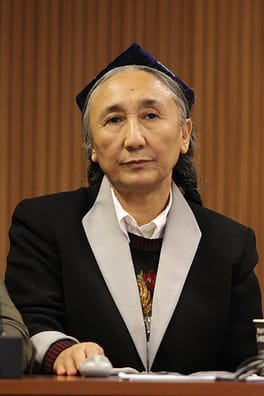
Photo: Panel_-_Guaranteeing_the_Rights_of_Minority_Women.jpg: United States Mission Geneva derivative work: FishInWater (talk) / CC BY 2.0 (source: Wikimedia Commons)
Rebiya Kadeer is a human rights defender, merchant and politician, born on January 21, 1947 in Altay City, Ili Kazakh Autonomous Prefecture, People's Republic of China. Rebiya Kadeer is 79 years old as of 2026. Listed accolades include Rafto Prize (2004).
My Take
Rebiya Kadeer is a figure I find hard not to admire. She built a fortune from nothing in 1980s Xinjiang, becoming one of the wealthiest women in China through real estate and a sprawling conglomerate, and then spent that standing advocating for the Uyghur people rather than retreating into comfort. That choice cost her dearly, and her 2004 Rafto Prize recognizes a courage that goes far beyond business acumen. What moves me most is the arc itself: someone who could have stayed quiet and rich instead became a voice for a marginalized community. Whatever one's politics, that kind of personal sacrifice for a cause demands a serious second look.
This take was written by generative AI, one per person, from publicly reported facts (editorial policy). It is a reading of the record, not reporting.
1. Profile
- Name (English)
- Rebiya Kadeer
- Name (Japanese)
- ラビア・カーディル
- Reading
- らびあ・かーでぃる
- Born
- January 21, 1947 (age 79)
- Origin
- Altay City, Ili Kazakh Autonomous Prefecture, People's Republic of China
- Occupation
- human rights defender / merchant / politician
- Zodiac / Chinese zodiac
- Aquarius / Boar
2. Background
Awards & achievements
- 2004 Rafto Prize
3. Links
4. About this entry
Tags
- Last updated
Facts are limited to publicly available information up to 2024; non-public or unconfirmed items are omitted. English text is machine-assisted (facts translated by Sonnet, "My Take" written by Opus 4.8). The Japanese page is the source of record.
Frequently asked questions
When was Rebiya Kadeer born?
Born January 21, 1947 (age 79).
Where is Rebiya Kadeer from?
Rebiya Kadeer is from Altay City, Ili Kazakh Autonomous Prefecture, People's Republic of China.
What does Rebiya Kadeer do?
Rebiya Kadeer works as human rights defender, merchant, politician.
Human rights defender — see all → · Merchant — see all → · More people from the People's Republic of China →