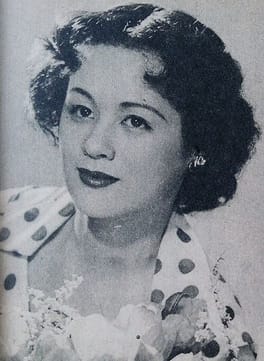
Photo: Unknown author / Public domain (source: Wikimedia Commons)
My Take
Rieko Sumi is the kind of figure who makes you stop and think about what it actually took to be a working actor in Japan across the mid-twentieth century. Born in 1928, she came up through Osaka Ongaku Daigaku — a music school background, which tells me she wasn't just learning lines but really thinking about voice, breath, and performance from the inside out. To be active as an actor through the wartime years and into the postwar rebuilding of Japanese culture took a particular kind of stubbornness and belief in what the stage or screen could do for people. The specifics of her filmography aren't widely documented in English, but that almost adds to the mystique — she wasn't chasing celebrity, she was doing the work. She passed away in 2005 at 77, and I find myself genuinely respectful of a career built in an era when there was no social media hype cycle to carry you, just craft.
This take was written by generative AI, one per person, from publicly reported facts (editorial policy). It is a reading of the record, not reporting.
Overview
Rieko Sumi (1928–2005) was a Japanese actress who studied at Osaka College of Music before building her career in the performing arts. She worked through the Showa era and remained active across Japanese film and stage. She passed away on October 12, 2005.
1. Profile
- Name (English)
- Rieko Sumi
- Name (Japanese)
- 角梨枝子
- Reading
- すみ りえこ
- Born
- March 7, 1928 – October 12, 2005
- Origin
- Japan
- Occupation
- Actor
- Zodiac / Chinese zodiac
- Pisces / Dragon
2. Background
- University
- Osaka College of Music
3. Links
- Wikipedia (Japanese)https://ja.wikipedia.org/wiki/%E8%A7%92%E6%A2%A8%E6%9E%9D%E5%AD%90
- Wikidatahttps://www.wikidata.org/wiki/Q11630757
4. About this entry
Tags
- Last updated
Facts are limited to publicly available information up to 2024; non-public or unconfirmed items are omitted. English text is machine-assisted (facts translated by Sonnet, "My Take" written by Opus 4.8). The Japanese page is the source of record.
Frequently asked questions
When was Rieko Sumi born?
Born March 7, 1928.
When did Rieko Sumi die?
Died October 12, 2005, aged 77.
Where was Rieko Sumi from?
Rieko Sumi was from Japan.
What did Rieko Sumi do?
Rieko Sumi worked as Actor.