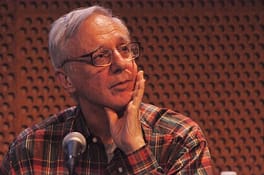
Photo: Joe Mabel / CC BY-SA 3.0 (source: Wikimedia Commons)
Born on April 18, 1942, Robert Christgau is from Greenwich Village, New York, United States. Robert Christgau is credited as a journalist, reporter and essayist. That works out to 84 years old in 2026. Schooling on record includes Flushing High School and Dartmouth College. Recorded honors include Guggenheim Fellowship.
My Take
Christgau is one of those rare figures who didn't just review music, he built the grammar everyone else borrows from. What impresses me most isn't the famous letter-grade verdicts, it's the curiosity behind them: championing hip hop, riot grrrl and African pop years before the mainstream caught up takes real ears and real nerve. A Greenwich Village kid with a Guggenheim who treated rock criticism as serious intellectual work, he basically legitimized a whole profession. I read him less for whether he liked an album and more for how sharply he could argue. That argumentative honesty is the part I'd want today's critics to inherit.
This take was written by generative AI, one per person, from publicly reported facts (editorial policy). It is a reading of the record, not reporting.
1. Profile
- Name (English)
- Robert Christgau
- Name (Japanese)
- ロバート・クリストガウ
- Reading
- ろばーと・くりすとがう
- Born
- April 18, 1942 (age 84)
- Origin
- Greenwich Village, New York, United States
- Occupation
- journalist / reporter / essayist / writer / music critic
- Zodiac / Chinese zodiac
- Aries / Horse
2. Background
- High school
- Flushing High School
- University
- Dartmouth College
Awards & achievements
- Guggenheim Fellowship
3. Links
- Official sitehttps://www.robertchristgau.com/index.php
- Xhttps://x.com/rxgau
- Wikipedia (English)https://en.wikipedia.org/wiki/Robert%20Christgau
- Wikipedia (Japanese)https://ja.wikipedia.org/wiki/%E3%83%AD%E3%83%90%E3%83%BC%E3%83%88%E3%83%BB%E3%82%AF%E3%83%AA%E3%82%B9%E3%83%88%E3%82%AC%E3%82%A6
- Wikidatahttps://www.wikidata.org/wiki/Q314382
4. About this entry
Tags
- Last updated
Facts are limited to publicly available information up to 2024; non-public or unconfirmed items are omitted. English text is machine-assisted (facts translated by Sonnet, "My Take" written by Opus 4.8). The Japanese page is the source of record.
Frequently asked questions
When was Robert Christgau born?
Born April 18, 1942 (age 84).
Where is Robert Christgau from?
Robert Christgau is from Greenwich Village, New York, United States.
What does Robert Christgau do?
Robert Christgau works as journalist, reporter, essayist, writer, music critic.
Journalist — see all → · Reporter — see all → · More people from the United States →