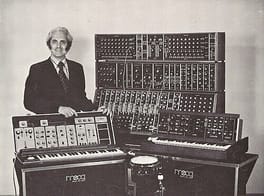
Photo: Moog Music / Norlin / Public domain (source: Wikimedia Commons)
Robert Moog was an inventor, university teacher and musician. Robert Moog was born on May 23, 1934 in New York City, New York, United States. Death is recorded on August 21, 2005, at the age of 71. Schooling on record includes Bronx High School of Science and Queens College. Recorded honors include Grammy Trustees Award (1970), National Inventors Hall of Fame (2013) and Polar Music Prize (2001).
My Take
Moog is one of the few inventors whose name became a verb for an entire sound. By building the first commercial synthesizer in 1964 and then the Minimoog, he did not just make an instrument; he handed musicians a new palette that reshaped pop, film, and electronic music for good. What I admire most is the fusion of engineer and artist in one person, translating circuits into emotion. The Grammy Trustees Award, the Polar Music Prize, and his Hall of Fame induction barely capture it. Half of modern music carries his fingerprints, and most listeners never know it.
This take was written by generative AI, one per person, from publicly reported facts (editorial policy). It is a reading of the record, not reporting.
1. Profile
- Name (English)
- Robert Moog
- Name (Japanese)
- ロバート・モーグ
- Reading
- ろばーと・もーぐ
- Born
- May 23, 1934 – August 21, 2005
- Origin
- New York City, New York, United States
- Occupation
- inventor / university teacher / musician / musical instrument maker
- Zodiac / Chinese zodiac
- Gemini / Dog
2. Background
- High school
- Bronx High School of Science
- University
- Queens College
Awards & achievements
- 1970 Grammy Trustees Award
- 2013 National Inventors Hall of Fame
- 2001 Polar Music Prize
3. Works & records
Filmography / notable works
| Category | Title |
|---|---|
| Notable work | synthesizer |
4. Links
- Wikipedia (English)https://en.wikipedia.org/wiki/Robert%20Moog
- Wikipedia (Japanese)https://ja.wikipedia.org/wiki/%E3%83%AD%E3%83%90%E3%83%BC%E3%83%88%E3%83%BB%E3%83%A2%E3%83%BC%E3%82%B0
- Wikidatahttps://www.wikidata.org/wiki/Q200883
5. About this entry
Tags
- Last updated
Facts are limited to publicly available information up to 2024; non-public or unconfirmed items are omitted. English text is machine-assisted (facts translated by Sonnet, "My Take" written by Opus 4.8). The Japanese page is the source of record.
Frequently asked questions
When was Robert Moog born?
Robert Moog was born on May 23, 1934.
When did Robert Moog die?
Robert Moog died on August 21, 2005, aged 71.
Where was Robert Moog from?
Robert Moog was from New York City, New York, United States.
What did Robert Moog do?
Robert Moog worked as inventor, university teacher, musician, musical instrument maker.
Where did Robert Moog study?
Robert Moog attended Queens College.
What was Robert Moog known for?
Robert Moog's notable works include synthesizer.
Inventor — see all → · University teacher — see all → · More people from the United States → · More people born on May 23 →