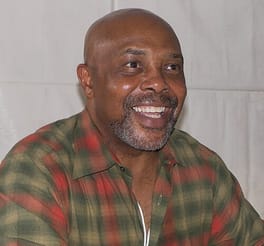
Photo: Larry D. Moore / CC BY 4.0 (source: Wikimedia Commons)
Roscoe Orman, born on June 11, 1944 in The Bronx, New York, United States, is a television actor, film actor and singer. As of 2026, Roscoe Orman is 82 years old. Education on record includes High School of Art and Design.
My Take
Roscoe Orman is the kind of figure I find more important than most award-winners. As Gordon on Sesame Street, he was a steady, kind grown-up beamed into millions of childhoods, and that imprint outlasts any trophy. What moves me is the coherence of his life: actor, writer, singer, children's author, and child advocate, all pointing the same direction. The role and the man seem to be made of the same material. In an industry obsessed with prestige, I'm drawn to people whose work quietly shaped how a generation understood warmth and decency. Orman is exactly that, and I trust him completely.
This take was written by generative AI, one per person, from publicly reported facts (editorial policy). It is a reading of the record, not reporting.
1. Profile
- Name (English)
- Roscoe Orman
- Name (Japanese)
- ロスコー・オーマン
- Reading
- ろすこー・おーまん
- Born
- June 11, 1944 (age 82)
- Origin
- The Bronx, New York, United States
- Occupation
- television actor / film actor / writer / singer / children's writer
- Zodiac / Chinese zodiac
- Gemini / Monkey
2. Background
- High school
- High School of Art and Design
3. Links
4. About this entry
Tags
- Last updated
Facts are limited to publicly available information up to 2024; non-public or unconfirmed items are omitted. English text is machine-assisted (facts translated by Sonnet, "My Take" written by Opus 4.8). The Japanese page is the source of record.
Frequently asked questions
When was Roscoe Orman born?
Born June 11, 1944 (age 82).
Where is Roscoe Orman from?
Roscoe Orman is from The Bronx, New York, United States.
What does Roscoe Orman do?
Roscoe Orman works as television actor, film actor, writer, singer, children's writer.
Television actor — see all → · Film actor — see all → · More people from the United States →