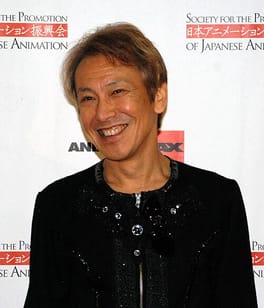
Photo: Erika_Rodriguez (Kika, a Major staff(owner, regarding to http://about.me/erikarodriguez) of Retornoanime.com, see http://retornoanime.com/staff and http://about.me/erikarodriguez) / CC BY-SA 2.0 (source: Wikimedia Commons)
Public records list Ryō Horikawa as a seiyū and child actor. Ryō Horikawa was born in Osaka, Osaka Prefecture, Japan on February 1, 1958. That works out to 68 years old in 2026. Notable works include はま寿司 タッチパネルの声デフォルトである花江夏樹との選択。 (2025), ドラゴンボールDAIMA (2024) and スーパーロボット大戦DD (2024). The recorded affiliation is ジャグラーインターナショナル.
My Take
If you have watched Dragon Ball in Japanese you already know Ryō Horikawa's voice, even if the name is new to you: he is Vegeta. That casting is a small miracle. The arrogance of a prince who genuinely cannot accept second place, and the wounded, almost comic desperation underneath it, come out of one throat. Plenty of actors can play haughty; very few make haughty sympathetic. What I admire most is the sheer duration. He was born in Osaka in 1958, worked as a child actor before moving into voice work, and is still the definitive voice of characters he has been playing for decades — including Heiji Hattori in Detective Conan, where his native Kansai speech does something no Tokyo actor could fake. Japanese voice acting refreshes constantly with younger talent, so holding a signature role that long is an achievement in itself, separate from any single performance.
This take was written by generative AI, one per person, from publicly reported facts (editorial policy). It is a reading of the record, not reporting.
1. Profile
- Name (English)
- Ryō Horikawa
- Name (Japanese)
- 堀川りょう
- Reading
- ほりかわ りょう
- Born
- February 1, 1958 (age 68)
- Origin
- Osaka, Osaka Prefecture, Japan
- Weight
- 53 kg
- Occupation
- seiyū / actor / child actor
- Zodiac / Chinese zodiac
- Aquarius / Dog
- Blood type
- O
- Measurements
- 82 / 58 / 79
- Agency
- ジャグラーインターナショナル
2. Relationships
- Spouse
- 及川ひとみ
3. Works & records
Works summary
- Appearances
- 583 (1961–2025)
- By year
- 1961: 1, 1965: 2, 1966: 4, 1967: 3, 1968: 2, 1969: 6, 1971: 1, 1972: 2, 1983: 1, 1984: 2, 1985: 1, 1986: 1, 1987: 3, 1988: 3, 1989: 4, 1990: 2, 1991: 3, 1992: 6, 1993: 6, 1994: 4, 1995: 3, 1996: 3, 1997: 2, 1998: 2, 1999: 3, 2000: 1, 2001: 4, 2003: 2, 2004: 1, 2005: 6, 2006: 1, 2007: 1, 2009: 5, 2010: 6, 2011: 5, 2012: 2, 2013: 1, 2014: 2, 2015: 6, 2016: 1, 2017: 3, 2018: 5, 2019: 1, 2020: 2, 2021: 3, 2022: 2, 2023: 3, 2024: 2, 2025: 1
- Debut work
- 部長刑事 第161回、第178回、第214回、第487回
Filmography / notable works
| Category | Title | Year |
|---|---|---|
| Other content | はま寿司 タッチパネルの声デフォルトである花江夏樹との選択。 | 2025 |
| TV anime | ドラゴンボールDAIMA | 2024 |
| Game | スーパーロボット大戦DD | 2024 |
| Web anime | スーパードラゴンボールヒーローズ プロモーションCGムービー | 2023 |
| TV drama | トクメイ!警視庁特別会計係 第8話 | 2023 |
| CM | カーネクスト ラジオCM | 2023 |
| Game | モンスターストライク | 2022 |
| Game | 機動戦士ガンダム U.C. ENGAGE | 2021 |
| Radio drama | 負け犬たちのミッドナイト・バス | 2021 |
| Game | ドラゴンボールZ カカロット | 2020 |
| Film | 父と娘で奏でる奇跡の唄声 | 2019 |
| Web anime | スーパードラゴンボールヒーローズ プロモーションアニメ | 2018 |
| Game | ドラゴンボール ファイターズ | 2018 |
| Game | 機動戦士ガンダム エクストリームバーサス2 | 2018 |
| Radio | ラジオ雨色ココアside G | 2018 |
| CM | ドラゴンボールスクラッチ | 2018 |
| Radio | ラジオあめこん!! | 2017 |
| Film | さざ波ラプソディー | 2017 |
| CM | ベイブレードバースト 大会・改造編 | 2017 |
| TV anime | 雨色ココア | 2015 |
| TV anime | ドラゴンボール超 | 2015 |
| Game | ドラゴンボール ゼノバース | 2015 |
| CM | カップヌードル ベジータ | 2015 |
| Other content | むりやり同窓CAR(第2弾) | 2015 |
| Radio | ラジオ雨色ココア | 2014 |
| Stage | 旅立ち〜足寄より〜 | 2013 |
| Stage | 虹色の輪舞曲〜ロンド・デュ・ラルカンシェル〜(8枚の金貨) | 2012 |
| Stage | オーバースマイル | 2012 |
| OVA | 名探偵コナン MAGIC FILE2011 新潟〜東京 おみやげ狂騒曲 | 2011 |
| Stage | 銀河英雄伝説 第一章 銀河帝国編 | 2011 |
| Stage | ドッカンぐらぐら | 2011 |
| Stage | スタント | 2011 |
| Stage | ザ・デッド・エンド | 2011 |
| Game | ドラゴンボールヒーローズ | 2010 |
| Game | 機動戦士ガンダム エクストリームバーサス | 2010 |
| TV drama | 土曜ワイド劇場 タクシードライバーの推理日誌 | 2010 |
| Stage | 青面獣楊志 | 2010 |
| Other content | ファ見る! 2010年4月号の諜報員 | 2010 |
| Other content | Sakura-Con 2010 | 2010 |
| TV anime | ドラゴンボール改 | 2009 |
| Game | ドラゴンボール レイジングブラスト | 2009 |
| TV drama | アタシんちの男子 第6話・最終回 | 2009 |
| Stage | 脳の国のDr.シナプス | 2009 |
| Stage | ネバーランド A GO! GO! | 2007 |
| Stage | 不死病2006 | 2006 |
| Game | ドラゴンボールZ Sparking! | 2005 |
| Radio | りょうとりゆのパケディオ・チャンネル | 2005 |
| Stage | LIVE WELL ! | 2005 |
| Stage | SEE YOU あげいん | 2005 |
| CM | ドラゴンボールZ 舞空烈戦 | 2005 |
| Other content | Anime Expo 2005 | 2005 |
| Game | ドラゴンボールZ 舞空闘劇 | 2004 |
| Game | ドラゴンボールZ | 2003 |
| Film | ヘヴンズ・ドア 殺人症候群 | 2003 |
| OVA | スペース・ファンタジア 2001夜物語 | 2001 |
| Stage | 八岐大蛇 倭王伝 巻之弐 | 2001 |
| Stage | オンリー・ワン | 2001 |
| Stage | ハルちゃん | 2001 |
| Stage | オリジナル | 2000 |
4. Links
- Official sitehttp://yaplog.jp/horikawa-ryo/
- Xhttps://x.com/ryohorikawa
- Wikipedia (English)https://en.wikipedia.org/wiki/Ry%C5%8D%20Horikawa
- Wikipedia (Japanese)https://ja.wikipedia.org/wiki/%E5%A0%80%E5%B7%9D%E3%82%8A%E3%82%87%E3%81%86
- Wikidatahttps://www.wikidata.org/wiki/Q2540053
5. About this entry
Tags
- Last updated
Facts are limited to publicly available information up to 2024; non-public or unconfirmed items are omitted. Works and profile fields sourced from Wikipedia reflect content as of 2026-08-26. English text is machine-assisted (facts translated by Sonnet, "My Take" written by Opus 4.8). The Japanese page is the source of record.
Frequently asked questions
When was Ryō Horikawa born?
Born February 1, 1958 (age 68).
Where is Ryō Horikawa from?
Ryō Horikawa is from Osaka, Osaka Prefecture, Japan.
What does Ryō Horikawa do?
Ryō Horikawa works as seiyū, actor, child actor.
What is Ryō Horikawa's blood type?
O.
What agency is Ryō Horikawa with?
Ryō Horikawa is with ジャグラーインターナショナル.
What is Ryō Horikawa known for?
Notable works include はま寿司 タッチパネルの声デフォルトである花江夏樹との選択。, ドラゴンボールDAIMA, スーパーロボット大戦DD.
Seiyū — see all → · Actor — see all → · More people from Japan →