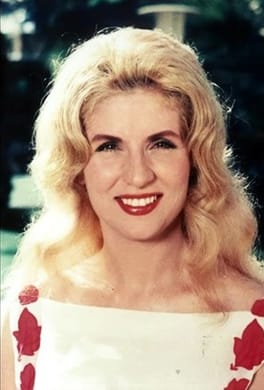
Photo: Unknown author / Public domain (source: Wikimedia Commons)
Sabah was credited as a singer and actor. Sabah was born on November 10, 1927 in Bdadoun, Mount Lebanon Governorate, Lebanon. Death is recorded on November 26, 2014, at the age of 87. Awards on record include Knight of the National Order of the Cedar. Notable works include The Second Man, Love Is So and Smooth Hands.
My Take
Sabah commands my respect as one of the true monuments of Arab music. Born Jeanette Feghali in the Lebanese mountains in 1927, she launched her career in Egypt and grew into a star across the entire Arab world, building a catalogue over six decades that dwarfed her peers. She earned the National Order of the Cedar and is rightly counted among the greatest Arab singers of the twentieth century. What moves me is that she kept singing through a region torn by upheaval; sustaining that joy across such turbulent times is its own kind of courage.
This take was written by generative AI, one per person, from publicly reported facts (editorial policy). It is a reading of the record, not reporting.
1. Profile
- Name (English)
- Sabah
- Name (Japanese)
- サバー
- Reading
- さばー
- Born
- November 10, 1927 – November 26, 2014
- Origin
- Bdadoun, Mount Lebanon Governorate, Lebanon
- Occupation
- singer / actor
- Zodiac / Chinese zodiac
- Scorpio / Rabbit
2. Background
Awards & achievements
- Knight of the National Order of the Cedar
3. Works & records
Filmography / notable works
| Category | Title |
|---|---|
| Notable work | The Second Man |
| Notable work | Love Is So |
| Notable work | Smooth Hands |
| Notable work | Paris and Love |
4. Links
- Wikipedia (English)https://en.wikipedia.org/wiki/Sabah%20(singer)
- Wikidatahttps://www.wikidata.org/wiki/Q2600118
5. About this entry
Tags
- Last updated
Facts are limited to publicly available information up to 2024; non-public or unconfirmed items are omitted. English text is machine-assisted (facts translated by Sonnet, "My Take" written by Opus 4.8). The Japanese page is the source of record.
Frequently asked questions
When was Sabah born?
Sabah was born on November 10, 1927.
When did Sabah die?
Sabah died on November 26, 2014, aged 87.
Where was Sabah from?
Sabah was from Bdadoun, Mount Lebanon Governorate, Lebanon.
What did Sabah do?
Sabah worked as singer, actor.
What was Sabah known for?
Sabah's notable works include The Second Man, Love Is So, Smooth Hands.
Singer — see all → · Actor — see all → · More people from Lebanon → · More people born on November 10 →