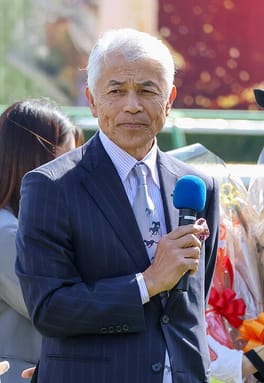
Photo: 馬三浪 / CC0 (source: Wikimedia Commons)
My Take
I'll be honest, Sakae Kunieda isn't who most people picture when they hear "celebrity," and that's exactly why I find him so easy to root for. He's a now-retired racehorse trainer, born back in 1955, who produced two Triple Tiara fillies, and what gets me is that he trained as a veterinarian at Tokyo University of Agriculture and Technology first, so he understands a horse from the inside out, not just by the stopwatch. That blend of cold science and genuine care is rare. Trainers live in the shadows here; the spotlight goes to the jockeys and the horses crossing the line, but every winner has someone like him up before dawn, quietly doing the unglamorous work. No flash, no noise, just decades of patient, honest craftsmanship. I can't help admiring that kind of steady, behind-the-scenes pro.
This take was written by generative AI, one per person, from publicly reported facts (editorial policy). It is a reading of the record, not reporting.
Overview
Sakae Kunieda (born April 14, 1955) is a retired Japanese horse trainer and veterinarian. He studied veterinary medicine at Tokyo University of Agriculture and Technology and trained at the JRA's Miho Training Center. Known as "the Kunieda of fillies", he won 12 Grade I races with fillies and mares and trained two Triple Tiara winners, Apapane in 2010 and Almond Eye in 2018, before retiring in March 2026.
1. Profile
- Name (English)
- Sakae Kunieda
- Name (Japanese)
- 国枝栄
- Reading
- くにえだ さかえ
- Born
- April 14, 1955 (age 71)
- Origin
- Japan
- Occupation
- Horse trainer / Veterinarian
- Zodiac / Chinese zodiac
- Aries / Goat
2. Background
- University
- Tokyo University of Agriculture and Technology
3. Links
4. About this entry
Tags
- Last updated
Only publicly available facts are listed; non-public or unconfirmed items are omitted. Base data was compiled from Wikidata from June 2026 onward; ages are recalculated daily and deaths are checked against Wikidata on an ongoing basis. English text is machine-assisted (facts translated by Sonnet, "My Take" written by Opus 4.8). The Japanese page is the source of record.
Frequently asked questions
When was Sakae Kunieda born?
Sakae Kunieda was born on April 14, 1955 and is 71 years old.
Where is Sakae Kunieda from?
Sakae Kunieda is from Japan.
What does Sakae Kunieda do?
Sakae Kunieda works as Horse trainer, Veterinarian.
Where did Sakae Kunieda study?
Sakae Kunieda attended Tokyo University of Agriculture and Technology.
Horse trainer — see all → · More people from Japan → · More people born on April 14 →