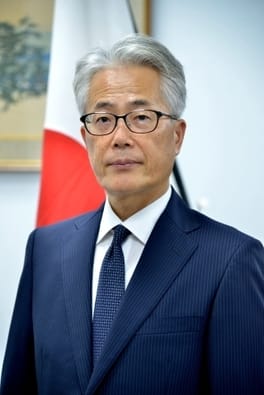
Photo: 日本国外務省在インド日本国大使館 / Embassy of Japan in India, Ministry of Foreign Affairs of Japan / CC BY 4.0 (source: Wikimedia Commons)
My Take
Satoshi Suzuki is the kind of person whose name sounds instantly ordinary until you learn what he actually did with his life — diplomat, international civil servant, the guy working the rooms you never see on TV. Graduating from Tokyo University of Foreign Studies tells you he was serious about languages from the jump, not someone who just fell into international work. His path ran from Hamamatsu through the nuclear nonproliferation desk and the IAEA to ambassadorships in India and Italy, which honestly feels right — diplomacy runs on discretion, not press releases. There's a weight to careers like this that celebrity culture doesn't have a good vocabulary for. No awards list, no fan club, just decades of work where the whole point was that nobody noticed you doing it.
This take was written by generative AI, one per person, from publicly reported facts (editorial policy). It is a reading of the record, not reporting.
Overview
Satoshi Suzuki (born August 22, 1959) is a Japanese diplomat and international civil servant. He is a graduate of Tokyo University of Foreign Studies, reflecting a career grounded in language and international affairs. Born in Hamamatsu, Shizuoka Prefecture, he joined the Ministry of Foreign Affairs in 1984, served as secretary to the Chief Cabinet Secretary, special assistant to the Director General of the International Atomic Energy Agency and Director-General of the Foreign Policy Bureau, then became ambassador to India and, from 2022, ambassador to Italy, San Marino and Malta, before resigning in January 2026.
1. Profile
- Name (English)
- Satoshi Suzuki
- Name (Japanese)
- 鈴木哲
- Reading
- すずき さとし
- Born
- August 22, 1959 (age 67)
- Origin
- Hamamatsu, Shizuoka Prefecture, Japan
- Occupation
- Diplomat / International Civil Servant
- Zodiac / Chinese zodiac
- Leo / Boar
2. Background
- University
- Tokyo University of Foreign Studies
3. Links
4. About this entry
Tags
- Last updated
Only publicly available facts are listed; non-public or unconfirmed items are omitted. Base data was compiled from Wikidata from June 2026 onward; ages are recalculated daily and deaths are checked against Wikidata on an ongoing basis. English text is machine-assisted (facts translated by Sonnet, "My Take" written by Opus 4.8). The Japanese page is the source of record.
Frequently asked questions
When was Satoshi Suzuki born?
Satoshi Suzuki was born on August 22, 1959 and is 67 years old.
Where is Satoshi Suzuki from?
Satoshi Suzuki is from Hamamatsu, Shizuoka Prefecture, Japan.
What does Satoshi Suzuki do?
Satoshi Suzuki works as Diplomat, International Civil Servant.
Where did Satoshi Suzuki study?
Satoshi Suzuki attended Tokyo University of Foreign Studies.
Diplomat — see all → · More people from Japan → · More people born on August 22 →