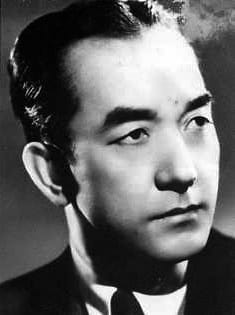
Photo: Unknown author / Public domain (source: Wikimedia Commons)
Sessue Hayakawa was listed as a novelist, screenwriter and film director. Born on June 10, 1886, Sessue Hayakawa was from Nanaura, Chiba Prefecture, Japan. Death is recorded on November 23, 1973, at the age of 87. Schooling on record includes University of Chicago. Recorded honors include star on Hollywood Walk of Fame.
My Take
Sessue Hayakawa is, to me, one of the most underappreciated trailblazers in film history. Long before any conversation about Asian representation in Hollywood, he was a genuine matinee idol who made Western audiences swoon during the silent era. What strikes me most is the breadth of the man: actor, novelist, screenwriter, director, all forged in an age stacked against him. He did not just appear in Hollywood, he commanded it as a leading man. Every Japanese actor working in the West today walks a path he cut alone a century ago. I tip my hat to him.
This take was written by generative AI, one per person, from publicly reported facts (editorial policy). It is a reading of the record, not reporting.
1. Profile
- Name (English)
- Sessue Hayakawa
- Name (Japanese)
- 早川雪洲
- Reading
- はやかわ せっしゅう
- Born
- June 10, 1886 – November 23, 1973
- Origin
- Nanaura, Chiba Prefecture, Japan
- Occupation
- actor / novelist / screenwriter / film director / stage actor
- Zodiac / Chinese zodiac
- Gemini / Dog
- Active years
- 1913 - 1967
2. Background
- University
- University of Chicago
Awards & achievements
- star on Hollywood Walk of Fame
3. Links
- Wikipedia (English)https://en.wikipedia.org/wiki/Sessue%20Hayakawa
- Wikipedia (Japanese)https://ja.wikipedia.org/wiki/%E6%97%A9%E5%B7%9D%E9%9B%AA%E6%B4%B2
- Wikidatahttps://www.wikidata.org/wiki/Q382068
4. About this entry
Tags
- Last updated
Facts are limited to publicly available information up to 2024; non-public or unconfirmed items are omitted. Works and profile fields sourced from Wikipedia reflect content as of 2026-08-26. English text is machine-assisted (facts translated by Sonnet, "My Take" written by Opus 4.8). The Japanese page is the source of record.
Frequently asked questions
When was Sessue Hayakawa born?
Sessue Hayakawa was born on June 10, 1886.
When did Sessue Hayakawa die?
Sessue Hayakawa died on November 23, 1973, aged 87.
Where was Sessue Hayakawa from?
Sessue Hayakawa was from Nanaura, Chiba Prefecture, Japan.
What did Sessue Hayakawa do?
Sessue Hayakawa worked as actor, novelist, screenwriter, film director, stage actor.
Where did Sessue Hayakawa study?
Sessue Hayakawa attended University of Chicago.
When was Sessue Hayakawa active?
Sessue Hayakawa was active from 1913 to 1967.
Actor — see all → · Novelist — see all → · More people from Japan → · More people born on June 10 →