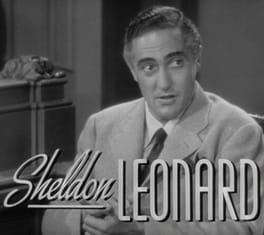
Photo: Trailer screenshot Licencing information :https://web.archive.org/web/20080321033709/http://www.sabucat.com/?pg=copyright and http://www.creativeclearance.com/guidelines.html#D2 / Public domain (source: Wikimedia Commons)
Sheldon Leonard was born in Manhattan, New York, United States on February 22, 1907. Sheldon Leonard was credited as a film producer, film director and television actor. Death is recorded on January 11, 1997, at the age of 89. Education on record includes Stuyvesant High School and Syracuse University. Recorded honors include Eagle Scout and Primetime Emmy Award for Outstanding Directing for a Comedy Series (1961).
My Take
Sheldon Leonard is exactly the kind of unsung architect I love to spotlight. Born in Manhattan, he first made his name as a character actor, but his real genius emerged behind the camera, where he became one of the defining shapers of early American television. Winning the 1961 Emmy for directing comedy confirmed his transformation from performer to creator, and directors who once acted tend to understand a set's rhythms intimately. His Eagle Scout roots even hint at the discipline behind it all. He died in 1997, but I think the medium he helped build owes him a quiet, lasting debt.
This take was written by generative AI, one per person, from publicly reported facts (editorial policy). It is a reading of the record, not reporting.
1. Profile
- Name (English)
- Sheldon Leonard
- Name (Japanese)
- シェルドン・レナード
- Reading
- しぇるどん・れなーど
- Born
- February 22, 1907 – January 11, 1997
- Origin
- Manhattan, New York, United States
- Occupation
- actor / film producer / film director / television actor / film actor
- Zodiac / Chinese zodiac
- Pisces / Goat
2. Background
- High school
- Stuyvesant High School
- University
- Syracuse University
Awards & achievements
- Eagle Scout
- 1961 Primetime Emmy Award for Outstanding Directing for a Comedy Series
3. Links
4. About this entry
Tags
- Last updated
Facts are limited to publicly available information up to 2024; non-public or unconfirmed items are omitted. English text is machine-assisted (facts translated by Sonnet, "My Take" written by Opus 4.8). The Japanese page is the source of record.
Frequently asked questions
When was Sheldon Leonard born?
Born February 22, 1907.
When did Sheldon Leonard die?
Died January 11, 1997, aged 89.
Where was Sheldon Leonard from?
Sheldon Leonard was from Manhattan, New York, United States.
What did Sheldon Leonard do?
Sheldon Leonard worked as actor, film producer, film director, television actor, film actor.
Actor — see all → · Film producer — see all → · More people from the United States →