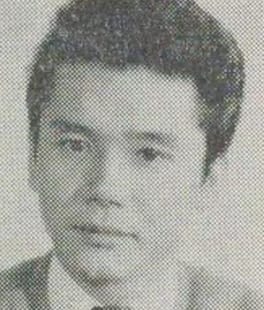
Photo: Unknown Author / Public domain (source: Wikimedia Commons)
Shigeru Tsuyuguchi was listed as an actor and seiyū. Shigeru Tsuyuguchi was born in Tokyo Prefecture, Japan on April 8, 1932. Schooling on record includes Ehime University. Recorded honors include White Bronze Award (1966). The listed height was 175 cm.
My Take
Shigeru Tsuyuguchi, who died in 2025 at the age of 93, spent his career doing the hardest thing an actor can do on television, which is less. On Taiyo ni Hoero!, a series built around young detectives running hot, he was the still point of the squad room. He would sit down, place one quiet line in that low voice, and the temperature of the whole scene would change. Restraint like that looks like nothing on the page and reads as pure authority on screen, and almost nobody can actually do it. He was a university-educated actor of an older school, a graduate of Ehime University, and in his later years he withdrew almost entirely from public view and never made a project of explaining himself. Leaving the work behind and stepping out of the frame is, fittingly, exactly what his most famous character would have done.
This take was written by generative AI, one per person, from publicly reported facts (editorial policy). It is a reading of the record, not reporting.
1. Profile
- Name (English)
- Shigeru Tsuyuguchi
- Name (Japanese)
- 露口茂
- Reading
- つゆぐち しげる
- Born
- April 8, 1932
- Origin
- Tokyo Prefecture, Japan
- Height
- 175 cm
- Occupation
- actor / seiyū
- Zodiac / Chinese zodiac
- Aries / Monkey
- Blood type
- B
- Active years
- 1955 - 1995
2. Background
- University
- Ehime University
Awards & achievements
- 1966 White Bronze Award
3. Works & records
Filmography / notable works
| Category | Title |
|---|---|
| Notable work | Taiyō ni Hoero! |
4. Links
- Wikipedia (English)https://en.wikipedia.org/wiki/Shigeru%20Tsuyuguchi
- Wikipedia (Japanese)https://ja.wikipedia.org/wiki/%E9%9C%B2%E5%8F%A3%E8%8C%82
- Wikidatahttps://www.wikidata.org/wiki/Q11660938
5. About this entry
Tags
- Last updated
Facts are limited to publicly available information up to 2024; non-public or unconfirmed items are omitted. Works and profile fields sourced from Wikipedia reflect content as of 2026-08-26. English text is machine-assisted (facts translated by Sonnet, "My Take" written by Opus 4.8). The Japanese page is the source of record.
Frequently asked questions
When was Shigeru Tsuyuguchi born?
Born April 8, 1932.
Where was Shigeru Tsuyuguchi from?
Shigeru Tsuyuguchi was from Tokyo Prefecture, Japan.
What did Shigeru Tsuyuguchi do?
Shigeru Tsuyuguchi worked as actor, seiyū.
How tall was Shigeru Tsuyuguchi?
Shigeru Tsuyuguchi was 175 cm.
What was Shigeru Tsuyuguchi's blood type?
B.
When was Shigeru Tsuyuguchi active?
1955 - 1995.
What was Shigeru Tsuyuguchi known for?
Notable works include Taiyō ni Hoero!.
Actor — see all → · Seiyū — see all → · More people from Japan →