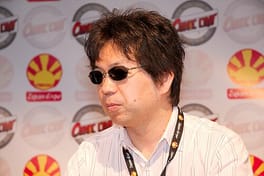
Photo: Georges Seguin (Okki) / CC BY-SA 3.0 (source: Wikimedia Commons)
Born on May 24, 1965 in Kyoto, Kyoto Prefecture, Japan, Shin'ichirō Watanabe is a film director, screenwriter and record producer. That puts Shin'ichirō Watanabe at 61 years old in 2026. Notable works include 機動戦士ガンダム 閃光のハサウェイ キルケーの魔女 (2026), LAZARUS ラザロ (2025) and エッジ・オブ・タイム (2025). Recorded activity spans 1987 -.
My Take
Shinichiro Watanabe is, to my mind, the rare director who composes with sound as much as with images. Cowboy Bebop alone would secure a legacy — its jazz-soaked melancholy converted countless skeptics into anime believers — but he kept experimenting: the hip-hop-infused Samurai Champloo, the absurdist Space Dandy, the music-driven Carole and Tuesday. Each project sounds different because he treats genre as an instrument, not a cage. Born in Kyoto yet creating stateless, borderless worlds, he embodies what I love about Japanese animation at its best: local craft with universal reach. I genuinely believe future historians of the medium will mark him as one of its great rhythm-makers.
This take was written by generative AI, one per person, from publicly reported facts (editorial policy). It is a reading of the record, not reporting.
1. Profile
- Name (English)
- Shin'ichirō Watanabe
- Name (Japanese)
- 渡辺信一郎
- Reading
- わたなべ しんいちろう
- Born
- May 24, 1965 (age 61)
- Origin
- Kyoto, Kyoto Prefecture, Japan
- Occupation
- film director / screenwriter / record producer / animator / director
- Zodiac / Chinese zodiac
- Gemini / Snake
- Active years
- 1987 -
2. Works & records
Works summary
- Appearances
- 44 (1985–2026)
- By year
- 1985: 1, 1987: 1, 1988: 1, 1990: 3, 1991: 2, 1992: 3, 1993: 2, 1994: 1, 1995: 2, 1996: 1, 1998: 1, 2001: 1, 2003: 1, 2004: 4, 2005: 2, 2006: 1, 2007: 1, 2008: 2, 2010: 1, 2012: 2, 2014: 2, 2015: 1, 2019: 2, 2021: 2, 2022: 1, 2025: 2, 2026: 1
- Debut work
- 蒼き流星SPTレイズナー
Filmography / notable works
| Category | Title | Year |
|---|---|---|
| Theatrical anime | 機動戦士ガンダム 閃光のハサウェイ キルケーの魔女 | 2026 |
| TV anime | LAZARUS ラザロ | 2025 |
| Theatrical anime | エッジ・オブ・タイム | 2025 |
| Web anime | ブレードランナー ブラックアウト2022 | 2022 |
| TV anime | Sonny Boy | 2021 |
| Theatrical anime | 機動戦士ガンダム 閃光のハサウェイ | 2021 |
| TV anime | キャロル&チューズデイ | 2019 |
| Other content | More | 2019 |
| TV anime | デス・パレード | 2015 |
| TV anime | スペース☆ダンディ | 2014 |
| TV anime | 残響のテロル | 2014 |
| TV anime | 坂道のアポロン | 2012 |
| TV anime | LUPIN the Third -峰不二子という女- | 2012 |
| TV anime | STAR DRIVER 輝きのタクト | 2010 |
| TV anime | 鉄腕バーディー DECODE | 2008 |
| TV anime | ミチコとハッチン | 2008 |
| Theatrical anime | BABY BLUE | 2007 |
| TV anime | Ergo Proxy | 2006 |
| TV anime | 交響詩篇エウレカセブン | 2005 |
| TV anime | ノエイン もうひとりの君へ | 2005 |
| TV anime | サムライチャンプルー | 2004 |
| Theatrical anime | マインド・ゲーム | 2004 |
| Theatrical anime | t.A.T.u. PARAGATE | 2004 |
| Other content | Nike CM 恐怖の部屋:自分の恐怖 | 2004 |
| OVA | キッズ・ストーリー(Kid's Story) | 2003 |
| Theatrical anime | COWBOY BEBOP 天国の扉 | 2001 |
| TV anime | カウボーイビバップ | 1998 |
| TV anime | 天空のエスカフローネ | 1996 |
| TV anime | 新機動戦記ガンダムW | 1995 |
| Theatrical anime | マクロスプラス MOVIE EDITION | 1995 |
| OVA | マクロスプラス | 1994 |
| TV anime | 疾風!アイアンリーガー | 1993 |
| TV anime | 剣勇伝説YAIBA | 1993 |
| TV anime | 元気爆発ガンバルガー | 1992 |
| TV anime | ママは小学4年生 | 1992 |
| Theatrical anime | 機動戦士ガンダム0083 ジオンの残光 | 1992 |
| OVA | カプリコン | 1991 |
| OVA | 機動戦士ガンダム0083 STARDUST MEMORY | 1991 |
| TV anime | オバタリアン | 1990 |
| TV anime | つる姫じゃ〜っ! | 1990 |
| TV anime | 魔神英雄伝ワタル2 | 1990 |
| OVA | 機甲猟兵メロウリンク | 1988 |
| OVA | ダーティペア | 1987 |
| TV anime | 蒼き流星SPTレイズナー | 1985 |
3. Links
4. About this entry
Tags
- Last updated
Facts are limited to publicly available information up to 2024; non-public or unconfirmed items are omitted. Works and profile fields sourced from Wikipedia reflect content as of 2026-08-26. English text is machine-assisted (facts translated by Sonnet, "My Take" written by Opus 4.8). The Japanese page is the source of record.
Frequently asked questions
When was Shin'ichirō Watanabe born?
Born May 24, 1965 (age 61).
Where is Shin'ichirō Watanabe from?
Shin'ichirō Watanabe is from Kyoto, Kyoto Prefecture, Japan.
What does Shin'ichirō Watanabe do?
Shin'ichirō Watanabe works as film director, screenwriter, record producer, animator, director.
How long has Shin'ichirō Watanabe been active?
1987 -.
What is Shin'ichirō Watanabe known for?
Notable works include 機動戦士ガンダム 閃光のハサウェイ キルケーの魔女, LAZARUS ラザロ, エッジ・オブ・タイム.
Film director — see all → · Screenwriter — see all → · More people from Japan →