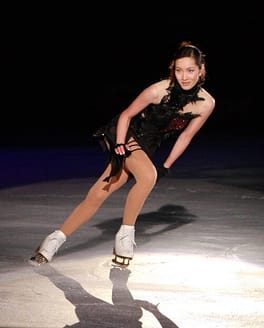
Photo: Top on ice / CC BY-SA 3.0 (source: Wikimedia Commons)
Shizuka Arakawa was born in Tokyo, Japan on December 29, 1981. Shizuka Arakawa is credited as a figure skater and figure skating choreographer. The age as of 2026 is 44. Schooling on record includes Waseda University. Listed accolades include Medal with Purple Ribbon (2006).
My Take
The move everyone remembers earned her no points at all. Shizuka Arakawa's layback Ina Bauer — that long arched glide across the ice in Turin in 2006 — is worth nothing on a judging sheet, and it is the single image Japan kept. Born in Tokyo in 1981, she won the World Championship in 2004, then became the first Japanese skater to take Olympic gold in figure skating, and only the second to win any Olympic figure skating medal at all, after Midori Ito's silver in 1992. The Medal with Purple Ribbon followed the same year. What stays with me is the gap between what a scoring system rewards and what an audience carries home for two decades. She choreographs now, which feels like the correct ending: teaching the next skaters where the points are not.
This take was written by generative AI, one per person, from publicly reported facts (editorial policy). It is a reading of the record, not reporting.
1. Profile
- Name (English)
- Shizuka Arakawa
- Name (Japanese)
- 荒川静香
- Reading
- あらかわ しずか
- Born
- December 29, 1981 (age 44)
- Origin
- Tokyo, Japan
- Height
- 166 cm
- Occupation
- figure skater / figure skating choreographer
- Zodiac / Chinese zodiac
- Capricorn / Rooster
2. Background
- University
- Waseda University
Awards & achievements
- 2006 Medal with Purple Ribbon
3. Links
- Official sitehttps://shizuka-arakawa.com/
- Instagramhttps://www.instagram.com/shizukaarakawa/
- Xhttps://x.com/tiramisu11
- Wikipedia (English)https://en.wikipedia.org/wiki/Shizuka%20Arakawa
- Wikipedia (Japanese)https://ja.wikipedia.org/wiki/%E8%8D%92%E5%B7%9D%E9%9D%99%E9%A6%99
- Wikidatahttps://www.wikidata.org/wiki/Q229686
4. About this entry
Tags
- Last updated
Facts are limited to publicly available information up to 2024; non-public or unconfirmed items are omitted. English text is machine-assisted (facts translated by Sonnet, "My Take" written by Opus 4.8). The Japanese page is the source of record.
Frequently asked questions
When was Shizuka Arakawa born?
Born December 29, 1981 (age 44).
Where is Shizuka Arakawa from?
Shizuka Arakawa is from Tokyo, Japan.
What does Shizuka Arakawa do?
Shizuka Arakawa works as figure skater, figure skating choreographer.
How tall is Shizuka Arakawa?
Shizuka Arakawa is 166 cm.
Figure skater — see all → · Figure skating choreographer — see all → · More people from Japan →