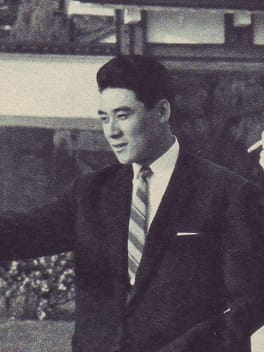
Photo: 博友社 (Hakuyu-sha Co., Ltd.) / Public domain (source: Wikimedia Commons)
My Take
A baseball player who moonlighted as a music producer — or was it the other way around? Either way, Shōjirō Nanba is the kind of figure who makes you realize how small your own ambitions really are. Born in Osaka in 1935, he had that classic Kansai tenacity: star at Kansai University, join the Yomiuri Giants, and then apparently decide that wasn't enough and wade into the music world too. At Warner-Pioneer he worked with Masashi Sada and Sachiko Kobayashi and secured the rights to Shigeo Nagashima recordings, and the combination of an athlete's discipline and a producer's ear sounds like a fascinating collision. He passed in 2009 at 74, and the honest truth is most people outside Japan have probably never heard his name — which feels like a loss, even if I can't fully articulate why.
This take was written by generative AI, one per person, from publicly reported facts (editorial policy). It is a reading of the record, not reporting.
Overview
Shōjirō Nanba (February 19, 1935 – August 14, 2009) was a Japanese baseball player and music producer born in Osaka Prefecture. He attended Kansai University and went on to pursue careers in both professional baseball and music production. He passed away on August 14, 2009, at the age of 74.
1. Profile
- Name (English)
- Shōjirō Nanba
- Name (Japanese)
- 難波昭二郎
- Reading
- なんば しょうじろう
- Born
- February 19, 1935 – August 14, 2009
- Origin
- Osaka Prefecture, Japan
- Height
- 173 cm
- Occupation
- Baseball player / Music producer
- Zodiac / Chinese zodiac
- Pisces / Boar
2. Background
- University
- Kansai University
3. Links
4. About this entry
Tags
- Last updated
Only publicly available facts are listed; non-public or unconfirmed items are omitted. Base data was compiled from Wikidata from June 2026 onward; ages are recalculated daily and deaths are checked against Wikidata on an ongoing basis. English text is machine-assisted (facts translated by Sonnet, "My Take" written by Opus 4.8). The Japanese page is the source of record.
Frequently asked questions
When was Shōjirō Nanba born?
Shōjirō Nanba was born on February 19, 1935.
When did Shōjirō Nanba die?
Shōjirō Nanba died on August 14, 2009, aged 74.
Where was Shōjirō Nanba from?
Shōjirō Nanba was from Osaka Prefecture, Japan.
What did Shōjirō Nanba do?
Shōjirō Nanba worked as Baseball player, Music producer.
How tall was Shōjirō Nanba?
Shōjirō Nanba was 173 cm tall.
Where did Shōjirō Nanba study?
Shōjirō Nanba attended Kansai University.
Baseball player — see all → · Music producer — see all → · More people from Japan → · More people born on February 19 →