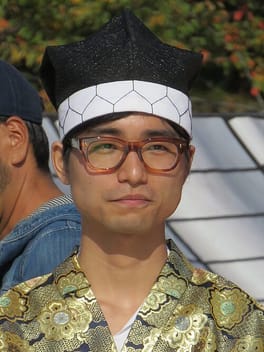
Photo: Terumasa / CC BY-SA 4.0 (source: Wikimedia Commons)
My Take
There's something quietly poetic about a professional shogi player coming out of Shingu, Wakayama — a town wedged between deep mountains, ancient pilgrimage trails, and the Pacific coast. Born in 1992, Takahiro Ohashi is right in that sweet spot of his thirties where shogi players tend to hit their sharpest, most dangerous form, and I find myself genuinely curious what his game looks like on the board. In truth his family moved to Tokyo before he started kindergarten, and he learned the game at a club in Hachioji, so Shingu is more birthplace than training ground. He turned pro in the same class as Sota Fujii and has climbed to 7-dan since, and I'll be watching his games going forward.
This take was written by generative AI, one per person, from publicly reported facts (editorial policy). It is a reading of the record, not reporting.
Overview
Takahiro Ōhashi is a Japanese professional shogi player born on September 22, 1992, in Shingu, Wakayama Prefecture. A disciple of Kazuharu Shoshi, he belongs to the Kansai branch and was promoted to 4-dan in October 2016 alongside Sota Fujii; he is now ranked 7-dan.
1. Profile
- Name (English)
- Takahiro Ōhashi
- Name (Japanese)
- 大橋貴洸
- Reading
- おおはし たかひろ
- Born
- September 22, 1992 (age 34)
- Origin
- Shingu, Wakayama Prefecture, Japan
- Occupation
- Professional Shogi Player
- Zodiac / Chinese zodiac
- Virgo / Monkey
2. Links
3. About this entry
Tags
- Last updated
Only publicly available facts are listed; non-public or unconfirmed items are omitted. Base data was compiled from Wikidata from June 2026 onward; ages are recalculated daily and deaths are checked against Wikidata on an ongoing basis. English text is machine-assisted (facts translated by Sonnet, "My Take" written by Opus 4.8). The Japanese page is the source of record.
Frequently asked questions
When was Takahiro Ōhashi born?
Takahiro Ōhashi was born on September 22, 1992 and is 34 years old.
Where is Takahiro Ōhashi from?
Takahiro Ōhashi is from Shingu, Wakayama Prefecture, Japan.
What does Takahiro Ōhashi do?
Takahiro Ōhashi works as Professional Shogi Player.
More people from Japan → · More people born on September 22 →