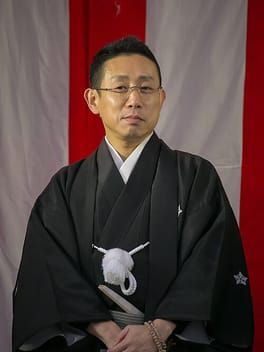
Photo: Ogiyoshisan / CC BY-SA 4.0 (source: Wikimedia Commons)
My Take
I love the kind of paradox Takataro Kataoka pulls off. Here's a guy born into a blue-blooded kabuki family from Kyoto, carrying centuries of tradition on his shoulders, and yet whenever I catch him on TV he reads like the softest, most low-key uncle in the room. That's the gap that gets me. On stage doing onnagata work the man can summon this quiet, effortless elegance, but park him on a variety show and he's all gentle smiles and zero ego. There's something distinctly Kyoto about that calm he carries into even the loudest set. I'll always have a soft spot for performers who are genuinely skilled but never lord it over anyone, and he slips between classical theater and modern screen roles without ever puffing his chest. Total class.
This take was written by generative AI, one per person, from publicly reported facts (editorial policy). It is a reading of the record, not reporting.
Overview
Takatarō Kataoka is a Japanese actor and kabuki performer born on January 23, 1968, in Kyoto Prefecture. He works across the traditional kabuki stage and contemporary film and television. Standing 165 cm tall, he is known for bridging classical Japanese theatrical arts with modern screen performance.
1. Profile
- Name (English)
- Takatarō Kataoka
- Name (Japanese)
- 片岡孝太郎
- Reading
- かたおか たかたろう
- Born
- January 23, 1968 (age 58)
- Origin
- Kyoto Prefecture, Japan
- Height
- 165cm
- Occupation
- Actor / Film Actor / Kabuki Actor
- Zodiac / Chinese zodiac
- Aquarius / Monkey
2. Works & records
Works summary
- Appearances
- 22 (1983–2023)
- By year (titles with a known year)
- 1983: 1, 1985: 1, 1987: 1, 1991: 2, 2003: 1, 2008: 1, 2009: 1, 2013: 1, 2014: 1, 2019: 1, 2022: 1, 2023: 2, year unknown: 8
- Debut work
- はぐれ三味線運命剣 -蒲原の巻-
Filmography / notable works
| Category | Title | Year |
|---|---|---|
| TV drama | 発見 昭和天皇御進講メモ~戦時下 知られざる外交戦~ | 2023 |
| TV drama | 大金塊 | 2023 |
| TV drama | 二人 | 2022 |
| TV drama | 拝謁(はいえつ)記 | 2019 |
| Film | The Little House | 2014 |
| Film | Emperor | 2013 |
| TV drama | 働き盛りのがん | 2009 |
| Film | Beauty | 2008 |
| TV drama | 白い巨塔 | 2003 |
| TV drama | 太平記 | 1991 |
| TV drama | Hotel Woman | 1991 |
| Film | Empire of the Sun | 1987 |
| TV drama | 真田太平記 | 1985 |
| TV drama | はぐれ三味線運命剣 -蒲原の巻- | 1983 |
| 女殺油地獄 | ||
| 心中天網島 | ||
| 傾城反魂香 | ||
| 彦山権現誓助剣 | ||
| TV drama | NHKスペシャル | |
| TV drama | 相棒 | |
| Variety show | ぶらり途中下車の旅 | |
| Variety show | 京都心の都へ プレミアム 〜千年の奏で〜 |
3. Links
4. About this entry
Tags
- Last updated
Only publicly available facts are listed; non-public or unconfirmed items are omitted. Base data was compiled from Wikidata from June 2026 onward; ages are recalculated daily and deaths are checked against Wikidata on an ongoing basis. Works and profile fields sourced from Wikipedia reflect content as of 2026-08-26. English text is machine-assisted (facts translated by Sonnet, "My Take" written by Opus 4.8). The Japanese page is the source of record.
Frequently asked questions
When was Takatarō Kataoka born?
Takatarō Kataoka was born on January 23, 1968 and is 58 years old.
Where is Takatarō Kataoka from?
Takatarō Kataoka is from Kyoto Prefecture, Japan.
What does Takatarō Kataoka do?
Takatarō Kataoka works as Actor, Film Actor, Kabuki Actor.
How tall is Takatarō Kataoka?
Takatarō Kataoka is 165 cm tall.
Actor — see all → · Film Actor — see all → · More people from Japan → · More people born on January 23 →