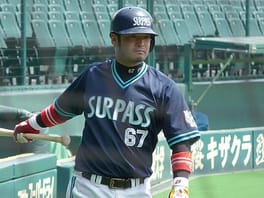
Photo: Cake6 (talk) / CC BY-SA 3.0 (source: Wikimedia Commons)
My Take
Tetsuya Yokoyama is a baseball player from Maizuru, Kyoto — and if you know anything about Maizuru, it's that it's a port city on the Sea of Japan, the kind of place that feels more salt and steel than bright-lights prefectural capital. There's something quietly compelling about a guy who comes out of that kind of town and works his way into professional baseball. Born in 1984, he spent a decade as a catcher with Kintetsu and Orix, then came back in 2015 as a developmental player for Rakuten when they ran short of catchers, which tells me he's the type who lets the game do the talking. I respect the archetype: harbor-town kid, no hype, just show up and grind. Quietly rooting for him.
This take was written by generative AI, one per person, from publicly reported facts (editorial policy). It is a reading of the record, not reporting.
Overview
Tetsuya Yokoyama is a Japanese former professional baseball catcher born on June 26, 1984, in Maizuru, Kyoto Prefecture. He stands 176 cm tall. Drafted by the Osaka Kintetsu Buffaloes in 2002, he moved to the Orix Buffaloes after the 2004 merger, played for the independent Ehime Mandarin Pirates in 2014, and returned as a developmental player with the Tohoku Rakuten Golden Eagles in 2015.
1. Profile
- Name (English)
- Tetsuya Yokoyama
- Name (Japanese)
- 横山徹也
- Reading
- よこやま てつや
- Born
- June 26, 1984 (age 42)
- Origin
- Maizuru, Kyoto Prefecture, Japan
- Height
- 176cm
- Occupation
- Baseball Player
- Zodiac / Chinese zodiac
- Cancer / Rat
2. Links
- Wikipedia (Japanese)https://ja.wikipedia.org/wiki/%E6%A8%AA%E5%B1%B1%E5%BE%B9%E4%B9%9F
- Wikidatahttps://www.wikidata.org/wiki/Q11542558
3. About this entry
Tags
- Last updated
Only publicly available facts are listed; non-public or unconfirmed items are omitted. Base data was compiled from Wikidata from June 2026 onward; ages are recalculated daily and deaths are checked against Wikidata on an ongoing basis. English text is machine-assisted (facts translated by Sonnet, "My Take" written by Opus 4.8). The Japanese page is the source of record.
Frequently asked questions
When was Tetsuya Yokoyama born?
Tetsuya Yokoyama was born on June 26, 1984 and is 42 years old.
Where is Tetsuya Yokoyama from?
Tetsuya Yokoyama is from Maizuru, Kyoto Prefecture, Japan.
What does Tetsuya Yokoyama do?
Tetsuya Yokoyama works as Baseball Player.
How tall is Tetsuya Yokoyama?
Tetsuya Yokoyama is 176 cm tall.
Baseball Player — see all → · More people from Japan → · More people born on June 26 →