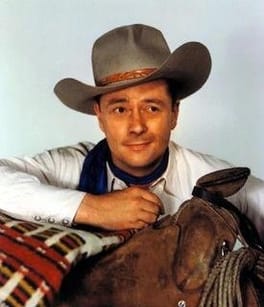
Photo: Jack Holt / CC BY-SA 4.0 (source: Wikimedia Commons)
Born on February 5, 1919, Tim Holt was from Beverly Hills, California, United States. Tim Holt was a film actor. Death is recorded on February 15, 1973, at the age of 54. Recorded honors include Distinguished Flying Cross.
My Take
Tim Holt is one of those golden-age figures I think deserves more credit than nostalgia usually grants him. He churned out forty-six RKO B westerns, yet he also turns up in three genuine masterpieces, The Magnificent Ambersons, My Darling Clementine, and The Treasure of the Sierra Madre. That range, from workhorse oater star to Welles and Huston collaborator, fascinates me. He was also a real war hero, decorated with the Distinguished Flying Cross. There is an unforced sincerity to his screen presence that I keep returning to. Dying at fifty-four in 1973, he left a body of work that still feels honest and durable.
This take was written by generative AI, one per person, from publicly reported facts (editorial policy). It is a reading of the record, not reporting.
1. Profile
- Name (English)
- Tim Holt
- Name (Japanese)
- ティム・ホルト
- Reading
- てぃむ・ほると
- Born
- February 5, 1919 – February 15, 1973
- Origin
- Beverly Hills, California, United States
- Occupation
- actor / film actor
- Zodiac / Chinese zodiac
- Aquarius / Goat
2. Background
Awards & achievements
- Distinguished Flying Cross
3. Links
- Wikipedia (English)https://en.wikipedia.org/wiki/Tim%20Holt
- Wikipedia (Japanese)https://ja.wikipedia.org/wiki/%E3%83%86%E3%82%A3%E3%83%A0%E3%83%BB%E3%83%9B%E3%83%AB%E3%83%88
- Wikidatahttps://www.wikidata.org/wiki/Q1064827
4. About this entry
Tags
- Last updated
Facts are limited to publicly available information up to 2024; non-public or unconfirmed items are omitted. English text is machine-assisted (facts translated by Sonnet, "My Take" written by Opus 4.8). The Japanese page is the source of record.
Frequently asked questions
When was Tim Holt born?
Born February 5, 1919.
When did Tim Holt die?
Died February 15, 1973, aged 54.
Where was Tim Holt from?
Tim Holt was from Beverly Hills, California, United States.
What did Tim Holt do?
Tim Holt worked as actor, film actor.
Actor — see all → · Film actor — see all → · More people from the United States →