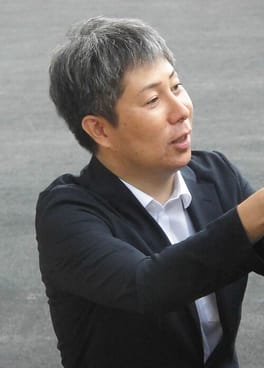
Photo: 印度孔雀 / CC BY-SA 4.0 (source: Wikimedia Commons)
My Take
Tooru Hayashi is the kind of guy who never makes the highlight reel but quietly makes everything work. Born in Hyogo in 1979 and raised in Chiba and Ibaraki, he went from Kaisei High School and the University of Tokyo to become a racehorse trainer, which means his office is a stable at four in the morning and his performance review happens every race day. Trainers are the unsung architects of the whole operation: they're the ones who decide when a horse is ready, when it isn't, and how to coax the best out of an animal that can't tell you what's wrong. His back-to-back Yasuda Kinen wins with Songline in 2022 and 2023 did the talking for him, and honestly that tracks perfectly. This is a craft-first, ego-last profession, and I respect the hell out of people who live it that way. The horse either runs well or it doesn't; no PR spin fixes that.
This take was written by generative AI, one per person, from publicly reported facts (editorial policy). It is a reading of the record, not reporting.
Overview
Tooru Hayashi is a Japanese racehorse trainer born on April 4, 1979, in Hyogo Prefecture, Japan. He works in the thoroughbred training profession, a field that demands daily hands-on evaluation of horses in pre-dawn stable hours. A University of Tokyo graduate who rode for its equestrian club, he qualified as a JRA trainer at Miho in 2017, opened his stable in 2018, and won the Yasuda Kinen in 2022 and 2023 with Songline.
1. Profile
- Name (English)
- Tooru Hayashi
- Name (Japanese)
- 林徹
- Reading
- はやし とおる
- Born
- April 4, 1979 (age 47)
- Origin
- Hyogo Prefecture, Japan
- Occupation
- Racehorse Trainer
- Zodiac / Chinese zodiac
- Aries / Goat
2. Links
- Wikipedia (Japanese)https://ja.wikipedia.org/wiki/%E6%9E%97%E5%BE%B9%20(%E7%AB%B6%E9%A6%AC)
- Wikidatahttps://www.wikidata.org/wiki/Q121354712
3. About this entry
Tags
- Last updated
Only publicly available facts are listed; non-public or unconfirmed items are omitted. Base data was compiled from Wikidata from June 2026 onward; ages are recalculated daily and deaths are checked against Wikidata on an ongoing basis. English text is machine-assisted (facts translated by Sonnet, "My Take" written by Opus 4.8). The Japanese page is the source of record.
Frequently asked questions
When was Tooru Hayashi born?
Tooru Hayashi was born on April 4, 1979 and is 47 years old.
Where is Tooru Hayashi from?
Tooru Hayashi is from Hyogo Prefecture, Japan.
What does Tooru Hayashi do?
Tooru Hayashi works as Racehorse Trainer.