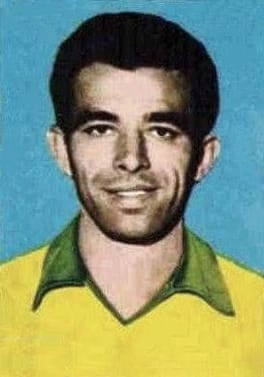
Photo: Panini / Public domain (source: Wikimedia Commons)
Vavá was born in Recife, Brazil on November 12, 1934. Vavá was listed as an association football player and association football coach. Death is recorded on January 19, 2002, at the age of 67. The listed height was 174 cm.
My Take
When I read about Vavá, what grabs me is the nickname "Peito de Aço" - Steel Chest. That tells you everything about the kind of striker he was: physical, fearless, built to bully defenders. Scoring in two World Cup finals for Brazil in the late 1950s and early 1960s puts him in rarefied air, yet I notice he's rarely the first name people cite from those golden teams. To me he feels like one of football's great unsung greats, the workhorse forward whose goals decided trophies while the spotlight drifted toward flashier teammates. A player I respect precisely because his record speaks louder than his fame.
This take was written by generative AI, one per person, from publicly reported facts (editorial policy). It is a reading of the record, not reporting.
1. Profile
- Name (English)
- Vavá
- Name (Japanese)
- ヴァヴァ
- Reading
- ゔぁゔぁ
- Born
- November 12, 1934 – January 19, 2002
- Origin
- Recife, Brazil
- Height
- 174 cm
- Occupation
- association football player / association football coach
- Zodiac / Chinese zodiac
- Scorpio / Dog
2. Links
3. About this entry
Tags
- Last updated
Facts are limited to publicly available information up to 2024; non-public or unconfirmed items are omitted. English text is machine-assisted (facts translated by Sonnet, "My Take" written by Opus 4.8). The Japanese page is the source of record.
Frequently asked questions
When was Vavá born?
Born November 12, 1934.
When did Vavá die?
Died January 19, 2002, aged 67.
Where was Vavá from?
Vavá was from Recife, Brazil.
What did Vavá do?
Vavá worked as association football player, association football coach.
How tall was Vavá?
Vavá was 174 cm.
Association football player — see all → · Association football coach — see all → · More people from Brazil →