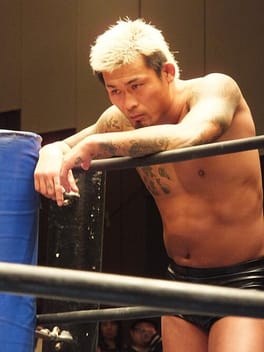
Photo: Yoccy441 / CC BY-SA 4.0 (source: Wikimedia Commons)
My Take
I had to read his resume twice, because the combination is genuinely wild: a University of Tokyo grad who trained as a civil engineer, then turned out to be a serious judoka, a mixed martial artist, and an actor on top of it all. Honestly, who gets to be that smart and that physical in one lifetime? Most people pick the desk or the dojo; this guy apparently refused to choose. There's something I really admire about that kind of quiet overachiever, a Tokyo kid from Meguro who just kept stacking unlikely lives on top of each other without seeming to brag about any of it. The titles do the talking. And weirdly, people who wear that many hats tend to be the most centered of all, like the variety is proof the core never wobbled. That's a way to live I can root for.
This take was written by generative AI, one per person, from publicly reported facts (editorial policy). It is a reading of the record, not reporting.
Overview
Yukio Sakaguchi is a Japanese civil engineer, judoka, actor, and mixed martial artist born on July 26, 1973, in Meguro, Tokyo. He holds a degree from the University of Tokyo, making him one of the rare figures to combine elite academic credentials with careers in both combat sports and entertainment. Details about his professional debut and agency affiliation are not publicly available.
1. Profile
- Name (English)
- Yukio Sakaguchi
- Name (Japanese)
- 坂口征夫
- Reading
- さかぐち ゆきお
- Born
- July 26, 1973 (age 53)
- Origin
- Meguro, Tokyo, Japan
- Height
- 177 cm
- Weight
- 77 kg
- Occupation
- Civil Engineer / Engineer / Judoka / Actor / Mixed Martial Artist
- Zodiac / Chinese zodiac
- Leo / Ox
- Agency
- DDTプロレスリング
2. Background
- University
- University of Tokyo
- Debut
- 2007-4-27
3. Works & records
Works summary
- Appearances
- 10 (2009–2024)
- By year
- 2009: 1, 2010: 3, 2016: 1, 2018: 2, 2022: 2, 2024: 1
- Debut work
- カムイ外伝
Filmography / notable works
| Category | Title | Role | Year |
|---|---|---|---|
| Appearance | 若武者 | 2024 | |
| Appearance | Pure Japanese | 2022 | |
| Appearance | TOKYO VICE 第1話 | 2022 | |
| Appearance | マジムリ学園 | 2018 | |
| Appearance | LADY NINJA〜青い影〜 | 2018 | |
| Appearance | 横浜中華街編 | 2016 | |
| Appearance | インディゴの夜 | 2010 | |
| Appearance | クロヒョウ 龍が如く新章 | 2010 | |
| Appearance | 裁判長!ここは懲役4年でどうすか | as 田崎被告 | 2010 |
| Appearance | カムイ外伝 | 2009 |
4. Links
5. About this entry
Tags
- Last updated
Facts are limited to publicly available information up to 2024; non-public or unconfirmed items are omitted. Works and profile fields sourced from Wikipedia reflect content as of 2026-08-26. English text is machine-assisted (facts translated by Sonnet, "My Take" written by Opus 4.8). The Japanese page is the source of record.
Frequently asked questions
When was Yukio Sakaguchi born?
Born July 26, 1973 (age 53).
Where is Yukio Sakaguchi from?
Yukio Sakaguchi is from Meguro, Tokyo, Japan.
What does Yukio Sakaguchi do?
Yukio Sakaguchi works as Civil Engineer, Engineer, Judoka, Actor, Mixed Martial Artist.
How tall is Yukio Sakaguchi?
Yukio Sakaguchi is 177 cm.
What agency is Yukio Sakaguchi with?
Yukio Sakaguchi is with DDTプロレスリング.
What is Yukio Sakaguchi known for?
Notable works include 若武者, Pure Japanese, TOKYO VICE 第1話.