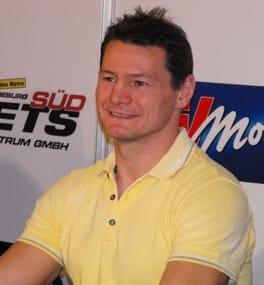
Photo: Kleinerrocky / CC BY-SA 3.0 (source: Wikimedia Commons)
Zsolt Erdei is listed as a boxer. Born on May 31, 1974, Zsolt Erdei is from Budapest, Hungary. That works out to 52 years old in 2026. Listed accolades include WBO World Light Heavyweight Champion and WBC World Cruiserweight Champion.
My Take
Zsolt Erdei earns my admiration for the sheer durability of his reign. From Budapest, he held the WBO light-heavyweight title from 2004 to 2009 and, remarkably, defended it eleven straight times against ten different challengers before going on to win the WBC cruiserweight belt as a two-division world champion. What strikes me is that defending a title for years is arguably harder and lonelier than winning one, demanding relentless consistency rather than a single great night. Erdei rose from Hungary to the very top of the sport, and his career speaks less of flash than of sustained, quiet dominance I genuinely respect.
This take was written by generative AI, one per person, from publicly reported facts (editorial policy). It is a reading of the record, not reporting.
1. Profile
- Name (English)
- Zsolt Erdei
- Name (Japanese)
- ゾルト・エルデイ
- Reading
- ぞると・えるでい
- Born
- May 31, 1974 (age 52)
- Origin
- Budapest, Hungary
- Occupation
- boxer
- Zodiac / Chinese zodiac
- Gemini / Tiger
2. Background
Awards & achievements
- WBO World Light Heavyweight Champion
- WBC World Cruiserweight Champion
3. Links
- Official sitehttp://zsolterdei.com/hu/hirek
- Wikipedia (English)https://en.wikipedia.org/wiki/Zsolt%20Erdei
- Wikipedia (Japanese)https://ja.wikipedia.org/wiki/%E3%82%BE%E3%83%AB%E3%83%88%E3%83%BB%E3%82%A8%E3%83%AB%E3%83%87%E3%82%A4
- Wikidatahttps://www.wikidata.org/wiki/Q227348
4. About this entry
Tags
- Last updated
Facts are limited to publicly available information up to 2024; non-public or unconfirmed items are omitted. English text is machine-assisted (facts translated by Sonnet, "My Take" written by Opus 4.8). The Japanese page is the source of record.
Frequently asked questions
When was Zsolt Erdei born?
Born May 31, 1974 (age 52).
Where is Zsolt Erdei from?
Zsolt Erdei is from Budapest, Hungary.
What does Zsolt Erdei do?
Zsolt Erdei works as boxer.