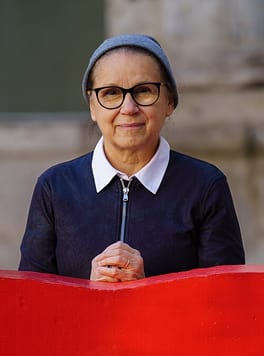
Photo: Pedro J Pacheco / CC BY-SA 4.0 (source: Wikimedia Commons)
Ildikó Enyedi was born on November 15, 1955 in Budapest, Hungary and is credited as a film director, screenwriter and lecturer. Ildikó Enyedi is 70 years old as of 2026. Schooling on record includes Corvinus University of Budapest. Awards on record include Meritorius Artist of Hungary (2000), Béla Balázs Award (1991), Caméra d'Or (1989) and 4 more. Notable works include My 20th Century and On Body and Soul.
My Take
Ildiko Enyedi is, to me, a filmmaker who writes poetry with images. Her 1989 debut My 20th Century announced her with a Camera d'Or at Cannes, a startlingly assured arrival. What moves me is the patience of the career that followed: after long quiet stretches, she returned to claim the Golden Bear in 2017 for On Body and Soul, that strange, tender tale of two slaughterhouse workers sharing the same dream. Hers is cinema you feel rather than parse. A Hungarian director who reached the summit on the strength of pure vision, more than once, she stands among the artists I most respect for their refusal to compromise.
This take was written by generative AI, one per person, from publicly reported facts (editorial policy). It is a reading of the record, not reporting.
1. Profile
- Name (English)
- Ildikó Enyedi
- Name (Japanese)
- イルディゴ・エンエディ
- Reading
- いるでぃご・えんえでぃ
- Born
- November 15, 1955 (age 70)
- Origin
- Budapest, Hungary
- Occupation
- film director / screenwriter / lecturer / director
- Zodiac / Chinese zodiac
- Scorpio / Goat
2. Background
- University
- Corvinus University of Budapest
Awards & achievements
- 2000 Meritorius Artist of Hungary
- 1991 Béla Balázs Award
- 1989 Caméra d'Or
- 2017 Golden Bear
- 2002 Officer's Cross of the Hungarian Order of Merit
- 2018 Hungarian Film Critics Awards
- 2024 Annual award ACFK
3. Works & records
Filmography / notable works
| Category | Title |
|---|---|
| Notable work | My 20th Century |
| Notable work | On Body and Soul |
4. Links
5. About this entry
Tags
- Last updated
Facts are limited to publicly available information up to 2024; non-public or unconfirmed items are omitted. English text is machine-assisted (facts translated by Sonnet, "My Take" written by Opus 4.8). The Japanese page is the source of record.
Frequently asked questions
When was Ildikó Enyedi born?
Born November 15, 1955 (age 70).
Where is Ildikó Enyedi from?
Ildikó Enyedi is from Budapest, Hungary.
What does Ildikó Enyedi do?
Ildikó Enyedi works as film director, screenwriter, lecturer, director.
What is Ildikó Enyedi known for?
Notable works include My 20th Century, On Body and Soul.
Film director — see all → · Screenwriter — see all → · More people from Hungary →