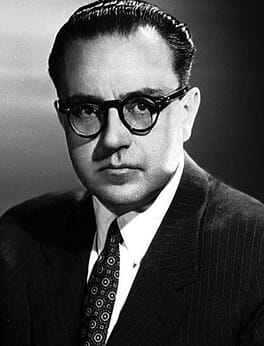
Photo: Annemarie Heinrich / Public domain (source: Wikimedia Commons)
Alberto Ginastera was born on April 11, 1916 in Buenos Aires, Argentina and was credited as a musicologist, film score composer and librettist. Alberto Ginastera died on June 25, 1983, aged 67. Awards on record include Guggenheim Fellowship (1942). Credited works include Harp Concerto.
My Take
Alberto Ginastera is the Argentine composer I reach for when I want classical music with real soil under it. His early work pulses with malambo rhythms and pampas color, then he pushed into thornier, more modernist territory, and that arc fascinates me. The Harp Concerto is the gateway piece, but his operas and the Estancia ballet are where the fire lives. He taught Piazzolla, which alone secures his place in the lineage. The data says American; he was Buenos Aires born, 1916 to 1983. One of the twentieth century's essential voices from the Americas, and criminally under-programmed outside specialist circles.
This take was written by generative AI, one per person, from publicly reported facts (editorial policy). It is a reading of the record, not reporting.
1. Profile
- Name (English)
- Alberto Ginastera
- Name (Japanese)
- アルベルト・ヒナステラ
- Reading
- あるべると・ひなすてら
- Born
- April 11, 1916 – June 25, 1983
- Origin
- Buenos Aires, Argentina
- Occupation
- composer / musicologist / film score composer / librettist
- Zodiac / Chinese zodiac
- Aries / Dragon
2. Background
Awards & achievements
- 1942 Guggenheim Fellowship
3. Works & records
Filmography / notable works
| Category | Title |
|---|---|
| Notable work | Harp Concerto |
4. Links
5. About this entry
Tags
- Last updated
Facts are limited to publicly available information up to 2024; non-public or unconfirmed items are omitted. English text is machine-assisted (facts translated by Sonnet, "My Take" written by Opus 4.8). The Japanese page is the source of record.
Frequently asked questions
When was Alberto Ginastera born?
Born April 11, 1916.
When did Alberto Ginastera die?
Died June 25, 1983, aged 67.
Where was Alberto Ginastera from?
Alberto Ginastera was from Buenos Aires, Argentina.
What did Alberto Ginastera do?
Alberto Ginastera worked as composer, musicologist, film score composer, librettist.
What was Alberto Ginastera known for?
Notable works include Harp Concerto.
Composer — see all → · Musicologist — see all → · More people from Argentina →