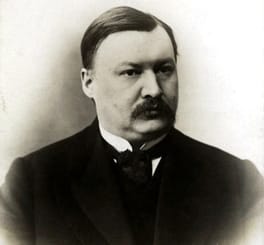
Photo: Unknown author / Public domain (source: Wikimedia Commons)
Alexander Glazunov, born on July 29, 1865 in Saint Petersburg, Russia, was a composer, conductor and pedagogue. Death is recorded on March 21, 1936, at the age of 70. Listed accolades include People's Artist of the RSFSR. Alexander Glazunov was associated with String Quartet No. 2 and Saxophone Concerto.
My Take
Glazunov fascinates me as a bridge figure in Russian music. A child prodigy from Saint Petersburg, he became director of the conservatory and held it together through the upheaval of revolution, reshaping the institution across its Petrograd and Leningrad incarnations. His Saxophone Concerto reveals a lyrical elegance that even a casual listener like me can feel. But what I admire most is that he didn't just compose; he taught and protected the next generation. Passing on talent rather than hoarding it is, to me, the mark of a true master, and his music still rings out worldwide.
This take was written by generative AI, one per person, from publicly reported facts (editorial policy). It is a reading of the record, not reporting.
1. Profile
- Name (English)
- Alexander Glazunov
- Name (Japanese)
- アレクサンドル・グラズノフ
- Reading
- あれくさんどる・ぐらずのふ
- Born
- July 29, 1865 – March 21, 1936
- Origin
- Saint Petersburg, Russia
- Occupation
- composer / conductor / pedagogue / musicologist / music educator
- Zodiac / Chinese zodiac
- Leo / Ox
2. Background
Awards & achievements
- People's Artist of the RSFSR
3. Works & records
Filmography / notable works
| Category | Title |
|---|---|
| Notable work | String Quartet No. 2 |
| Notable work | Saxophone Concerto |
4. Links
5. About this entry
Tags
- Last updated
Facts are limited to publicly available information up to 2024; non-public or unconfirmed items are omitted. English text is machine-assisted (facts translated by Sonnet, "My Take" written by Opus 4.8). The Japanese page is the source of record.
Frequently asked questions
When was Alexander Glazunov born?
Alexander Glazunov was born on July 29, 1865.
When did Alexander Glazunov die?
Alexander Glazunov died on March 21, 1936, aged 70.
Where was Alexander Glazunov from?
Alexander Glazunov was from Saint Petersburg, Russia.
What did Alexander Glazunov do?
Alexander Glazunov worked as composer, conductor, pedagogue, musicologist, music educator.
What was Alexander Glazunov known for?
Alexander Glazunov's notable works include String Quartet No. 2, Saxophone Concerto.
Composer — see all → · Conductor — see all → · More people from Russia → · More people born on July 29 →