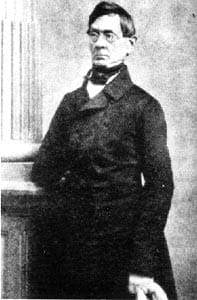
Photo: Unknown author / Public domain (source: Wikimedia Commons)
Anton Schindler was born on June 13, 1795 in Medlov, Olomouc Region, Czech Republic and was credited as a conductor, writer and musicologist. Death is recorded on January 16, 1864, at the age of 68. Education on record includes University of Vienna.
My Take
Anton Schindler is one of music history's great double-edged figures — the man who got closer to Beethoven than almost anyone, and then spent the rest of his life making sure everyone knew it, sometimes a little too creatively. He served as Beethoven's unpaid secretary, managed the deaf composer's household in his final years, and genuinely earned a front-row seat to one of history's towering careers. The tragedy is that Schindler apparently couldn't resist improving the story: scholars later discovered he forged entries in Beethoven's conversation books to inflate his own role. So what do you do with him? He's not trustworthy, but he's also irreplaceable — his 1840 biography, flaws and all, preserves details no one else bothered to record. He's a reminder that the people who write history always have skin in the game.
This take was written by generative AI, one per person, from publicly reported facts (editorial policy). It is a reading of the record, not reporting.
1. Profile
- Name (English)
- Anton Schindler
- Name (Japanese)
- アントン・シンドラー
- Reading
- あんとん・しんどらー
- Born
- June 13, 1795 – January 16, 1864
- Origin
- Medlov, Olomouc Region, Czech Republic
- Occupation
- conductor / writer / musicologist / music historian / biographer
- Zodiac / Chinese zodiac
- Gemini / Rabbit
2. Background
- University
- University of Vienna
3. Links
4. About this entry
Tags
- Last updated
Only publicly available facts are listed; non-public or unconfirmed items are omitted. Base data was compiled from Wikidata from June 2026 onward; ages are recalculated daily and deaths are checked against Wikidata on an ongoing basis. English text is machine-assisted (facts translated by Sonnet, "My Take" written by Opus 4.8). The Japanese page is the source of record.
Frequently asked questions
When was Anton Schindler born?
Anton Schindler was born on June 13, 1795.
When did Anton Schindler die?
Anton Schindler died on January 16, 1864, aged 68.
Where was Anton Schindler from?
Anton Schindler was from Medlov, Olomouc Region, Czech Republic.
What did Anton Schindler do?
Anton Schindler worked as conductor, writer, musicologist, music historian, biographer.
Where did Anton Schindler study?
Anton Schindler attended University of Vienna.
Conductor — see all → · Writer — see all → · More people from the Czech Republic → · More people born on June 13 →