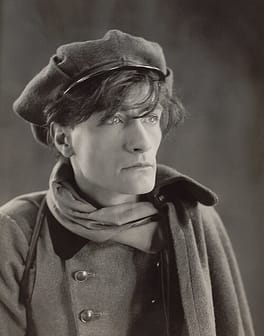
Photo: Agence de presse Meurisse / Public domain (source: Wikimedia Commons)
Public records list Antonin Artaud as a playwright, actor and poet. Antonin Artaud was born in Marseille, Bouches-du-Rhône, France on September 4, 1896. Death is recorded on March 4, 1948, at the age of 51. Awards on record include Prix Sainte-Beuve (1947).
My Take
Antonin Artaud is one of those figures who feels less like a historical person and more like a force of nature that happened to have a birth certificate. Born in Marseille in 1896, he spent his life trying to burn theatre down and rebuild it as something visceral, dangerous, and alive — his idea of the Theatre of Cruelty wasn't about shock for shock's sake, but about waking audiences up from the comfortable distance of watching a play and making them feel it in their bones. The man battled mental illness and addiction his whole life, spent years institutionalized, and still produced writing that crackles with raw electricity. He died in 1948 at just 51, but his influence on everything from experimental theatre to performance art to punk is enormous and ongoing. The Prix Sainte-Beuve in 1947 felt almost beside the point — Artaud wasn't chasing awards, he was chasing something closer to truth, no matter how painful that search got.
This take was written by generative AI, one per person, from publicly reported facts (editorial policy). It is a reading of the record, not reporting.
1. Profile
- Name (English)
- Antonin Artaud
- Name (Japanese)
- アントナン・アルトー
- Reading
- あんとなん・あるとー
- Born
- September 4, 1896 – March 4, 1948
- Origin
- Marseille, Bouches-du-Rhône, France
- Occupation
- playwright / actor / poet / film critic / writer
- Zodiac / Chinese zodiac
- Virgo / Monkey
2. Background
Awards & achievements
- 1947 Prix Sainte-Beuve
3. Links
4. About this entry
Tags
- Last updated
Only publicly available facts are listed; non-public or unconfirmed items are omitted. Base data was compiled from Wikidata from June 2026 onward; ages are recalculated daily and deaths are checked against Wikidata on an ongoing basis. English text is machine-assisted (facts translated by Sonnet, "My Take" written by Opus 4.8). The Japanese page is the source of record.
Frequently asked questions
When was Antonin Artaud born?
Antonin Artaud was born on September 4, 1896.
When did Antonin Artaud die?
Antonin Artaud died on March 4, 1948, aged 51.
Where was Antonin Artaud from?
Antonin Artaud was from Marseille, Bouches-du-Rhône, France.
What did Antonin Artaud do?
Antonin Artaud worked as playwright, actor, poet, film critic, writer.
Playwright — see all → · Actor — see all → · More people from France → · More people born on September 4 →