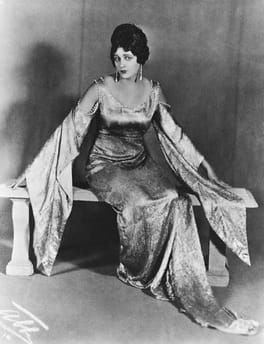
Photo: AnonymousUnknown author / Public domain (source: Wikimedia Commons)
Born on July 28, 1896 in Yakima, Washington, United States, Barbara La Marr was a screenwriter, stage actor and film actor. Barbara La Marr died on January 30, 1926, aged 29. Awards on record include star on Hollywood Walk of Fame.
My Take
There's something genuinely heartbreaking about Barbara La Marr — she packed what should have been a fifty-year career into barely six years and still managed to become one of the most talked-about women in 1920s Hollywood. Dubbed "The Girl Who Is Too Beautiful," she wasn't just a pretty face: she wrote screenplays too. She made twenty-seven films between 1920 and 1926, and then she was gone at twenty-nine — a reminder that the silent film era burned through its stars at a brutal pace. Her Hollywood Walk of Fame star is a small but fitting memorial. I find myself wishing we had more of her work to go back to, because the fragments that survive suggest someone with real, electric screen presence who deserved a much longer story.
This take was written by generative AI, one per person, from publicly reported facts (editorial policy). It is a reading of the record, not reporting.
1. Profile
- Name (English)
- Barbara La Marr
- Name (Japanese)
- バーバラ・ラ・マー
- Reading
- ばーばら・ら・まー
- Born
- July 28, 1896 – January 30, 1926
- Origin
- Yakima, Washington, United States
- Occupation
- actor / screenwriter / stage actor / film actor
- Zodiac / Chinese zodiac
- Leo / Monkey
2. Background
Awards & achievements
- star on Hollywood Walk of Fame
3. Links
4. About this entry
Tags
- Last updated
Only publicly available facts are listed; non-public or unconfirmed items are omitted. Base data was compiled from Wikidata from June 2026 onward; ages are recalculated daily and deaths are checked against Wikidata on an ongoing basis. English text is machine-assisted (facts translated by Sonnet, "My Take" written by Opus 4.8). The Japanese page is the source of record.
Frequently asked questions
When was Barbara La Marr born?
Barbara La Marr was born on July 28, 1896.
When did Barbara La Marr die?
Barbara La Marr died on January 30, 1926, aged 29.
Where was Barbara La Marr from?
Barbara La Marr was from Yakima, Washington, United States.
What did Barbara La Marr do?
Barbara La Marr worked as actor, screenwriter, stage actor, film actor.
Actor — see all → · Screenwriter — see all → · More people from the United States → · More people born on July 28 →