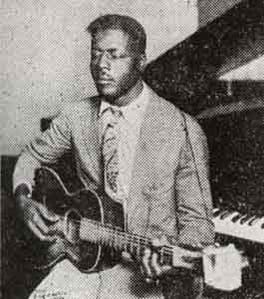
Photo: Columbia Records "race series" / Public domain (source: Wikimedia Commons)
Blind Willie Johnson was credited as a musician, singer and guitarist. Blind Willie Johnson was born on January 22, 1897 in Brenham, Texas, United States. Death is recorded on September 18, 1945, at the age of 48. Recorded honors include Grammy Hall of Fame.
My Take
Blind Willie Johnson is one of those figures who recorded only thirty songs between 1927 and 1930, yet somehow cast a shadow over everything that came after. What gets me is the contrast in his voice: that growling, gravelly chest tone set against the eerie precision of his slide guitar. He played gospel blues, but the spiritual weight feels almost otherworldly to me. I think it says a lot that one of his recordings was sent into deep space on the Voyager probe. For an artist who died in poverty and obscurity in 1945, that posthumous reach is staggering, and his Grammy Hall of Fame recognition feels well earned.
This take was written by generative AI, one per person, from publicly reported facts (editorial policy). It is a reading of the record, not reporting.
1. Profile
- Name (English)
- Blind Willie Johnson
- Name (Japanese)
- ブラインド・ウィリー・ジョンソン
- Reading
- ぶらいんど・うぃりー・じょんそん
- Born
- January 22, 1897 – September 18, 1945
- Origin
- Brenham, Texas, United States
- Occupation
- musician / singer / guitarist / preacher / composer
- Zodiac / Chinese zodiac
- Aquarius / Rooster
2. Background
Awards & achievements
- Grammy Hall of Fame
3. Links
- Wikipedia (English)https://en.wikipedia.org/wiki/Blind%20Willie%20Johnson
- Wikipedia (Japanese)https://ja.wikipedia.org/wiki/%E3%83%96%E3%83%A9%E3%82%A4%E3%83%B3%E3%83%89%E3%83%BB%E3%82%A6%E3%82%A3%E3%83%AA%E3%83%BC%E3%83%BB%E3%82%B8%E3%83%A7%E3%83%B3%E3%82%BD%E3%83%B3
- Wikidatahttps://www.wikidata.org/wiki/Q712586
4. About this entry
Tags
- Last updated
Facts are limited to publicly available information up to 2024; non-public or unconfirmed items are omitted. English text is machine-assisted (facts translated by Sonnet, "My Take" written by Opus 4.8). The Japanese page is the source of record.
Frequently asked questions
When was Blind Willie Johnson born?
Born January 22, 1897.
When did Blind Willie Johnson die?
Died September 18, 1945, aged 48.
Where was Blind Willie Johnson from?
Blind Willie Johnson was from Brenham, Texas, United States.
What did Blind Willie Johnson do?
Blind Willie Johnson worked as musician, singer, guitarist, preacher, composer.
Musician — see all → · Singer — see all → · More people from the United States →